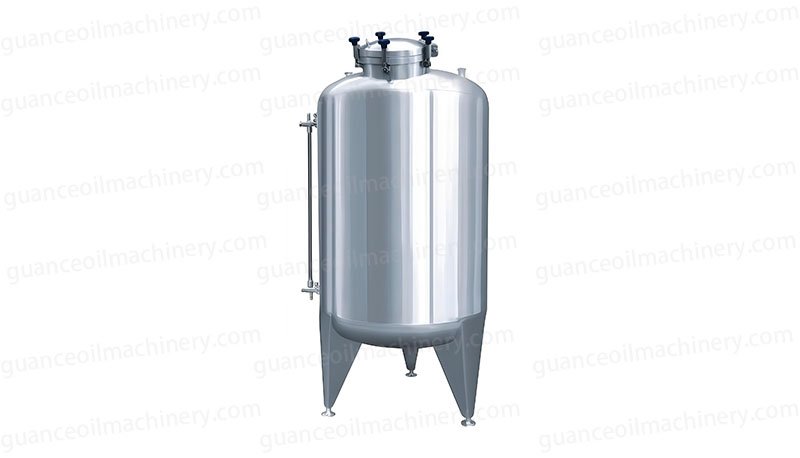
Model | Volume(m³) | Diameter(mm) | Can body(mm) | Total height(mm) |
|---|---|---|---|---|
| GCDM100 | 1 | 1000 | 1220 | 1760 |
| GCDM150 | 2 | 1200 | 1830 | 2600 |
| GCDM200 | 3 | 1450 | 1830 | 2600 |
| GCDM300 | 5 | 1850 | 1830 | 2760 |
| GCDM400 | 10 | 2050 | 3050 | 3980 |
| GCDM500 | 20 | 2650 | 3660 | 4500 |
| GCDM600 | 30 | 2800 | 4880 | 5400 |
| GCDM700 | 50 | 3230 | 6100 | 6600 |
Oil degumming equipment is essential in the oil refining industry, particularly in the processing of various oilseeds like soybeans, sunflower seeds, and rapeseed etc.
The primary function of degumming is to remove impurities like phospholipids, which can negatively degrade oil quality and the efficiency of subsequent refining stages.
This equipment ensures that oils are purified to meet both industry standards and client demands for high-quality edible oil plant.
There are two main types of degumming processes
1. Water Degumming: This method involves adding water to the crude oil to hydrate the phospholipids, allowing them to form a precipitate that can be easily removed.
2. Acid Degumming: For oils with lower phospholipid levels, acid degumming is used. An acid phosphoric acid is added to the oil to help separate the phospholipids from the oil.
Why Use Guance Machinery's Oil Degumming Equipment?
1. Oil Type: Different oils (soybean, sunflower, rapeseed) have varying levels of phospholipids. Water degumming is generally effective for oils with high phospholipid content, while acid degumming is better suited for oils with lower phospholipid levels.
2. Production Scale: For Medium and large-scale operations, semi continuous degumming refining are ideal. For smaller-scale operations, batch refining processing equipment might be more appropriate.
3. Efficiency: Choose equipment that minimizes oil loss and ensures high recovery rates. The degumming process should not only remove impurities but also preserve as much oil as possible.
4. Maintenance: Degumming equipment should be easy to clean and maintain. Equipment with fewer moving parts and a more robust design generally requires less maintenance and has a longer lifespan.
If you’re planning a vegetable oil or animal fat processing line (whether for soybean, sunflower, rapeseed, or other oilseeds), Contact Guance Machinery for a free consultation and equipment quote within 24 h.
Oil Degumming Equipment Advantages
1. Improved Oil Quality: Degumming removes unwanted phospholipids that can affect the color, taste, and shelf-life of the oil.
2. Enhanced Refining Efficiency: By removing impurities early in the process, the subsequent stages of refining (such as decolorization and deodorization) become more efficient.
3. Compliance with Industry Standards: High-quality degumming ensures that the oil meets food safety and regulatory standards for edible oils.
4. Reduced Operational Costs: Efficient degumming minimizes oil loss, reduces waste, and lowers energy consumption, leading to overall cost savings.
Q1: What is the difference between water degumming and acid degumming?
A: Water degumming is used for oils with higher phospholipid content. Acid degumming, used for oils with lower phospholipid levels.
Q2: How does oil degumming affect oil yield?
A: The degumming process typically results in minimal oil loss. However, efficient equipment and processes ensure that the yield is maximized while removing impurities.
Q3: Can oil degumming equipment be used for all types of oils?
A: Choosing the right oil degumming equipment depends on the oil’s phospholipid content to achieve optimal results.