A Rice Bran Oil Processing Plant is a solution for converting fresh rice bran into refined, dewaxed edible oil.
This Guance Machinery solution describes a three-workshop layout—pretreatment, extraction, and refining—based on proven industrial practice and continuous operation logic.
Raw Materials to Finished Oil Legend
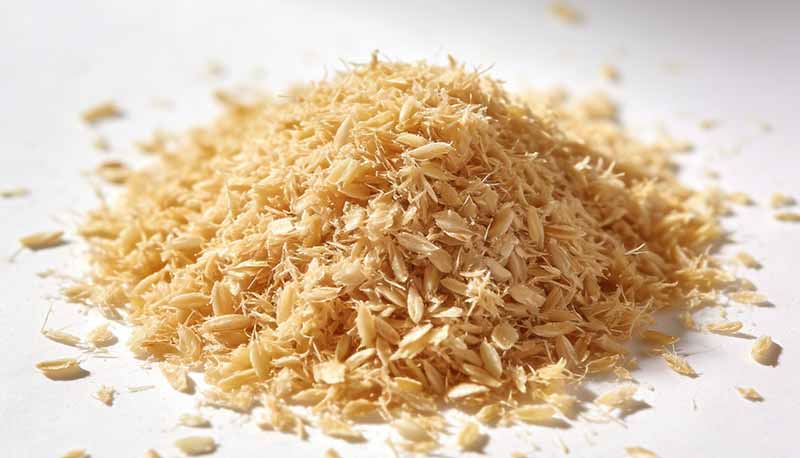
Rice Bran
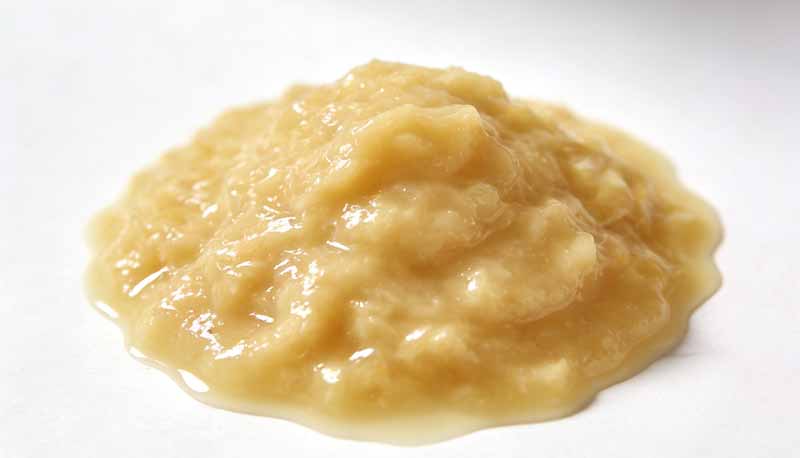
Rice Bran Cooker

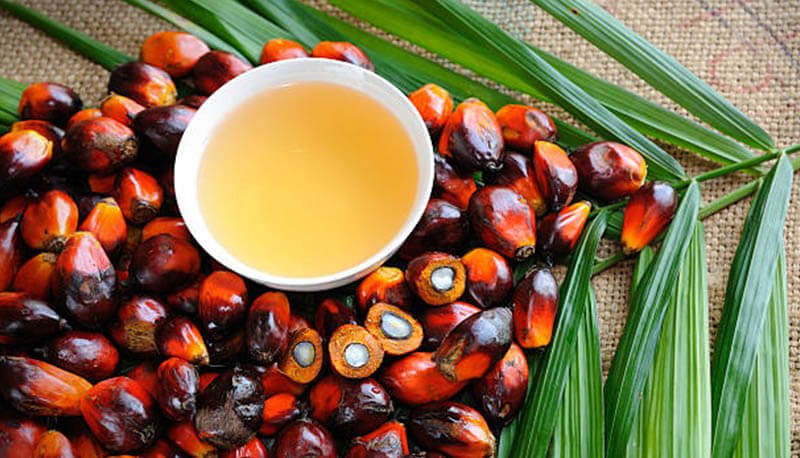
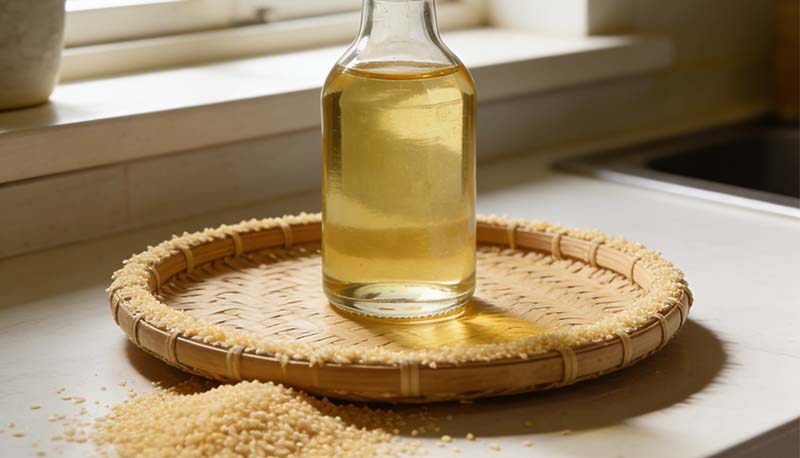
Crude Rice Bran Oil
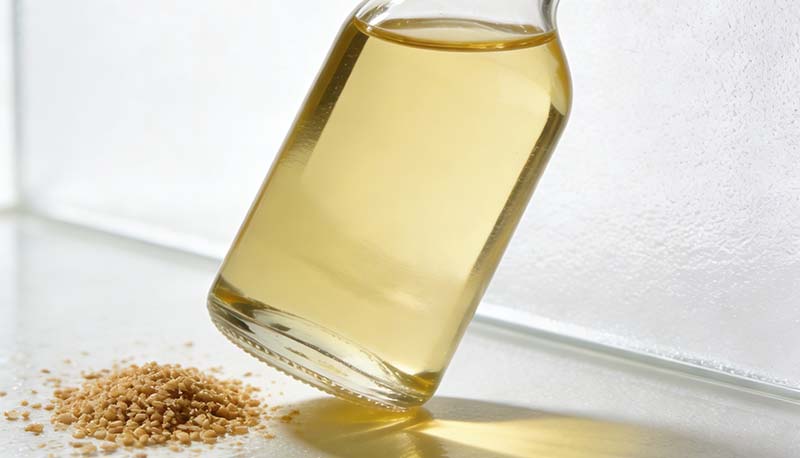
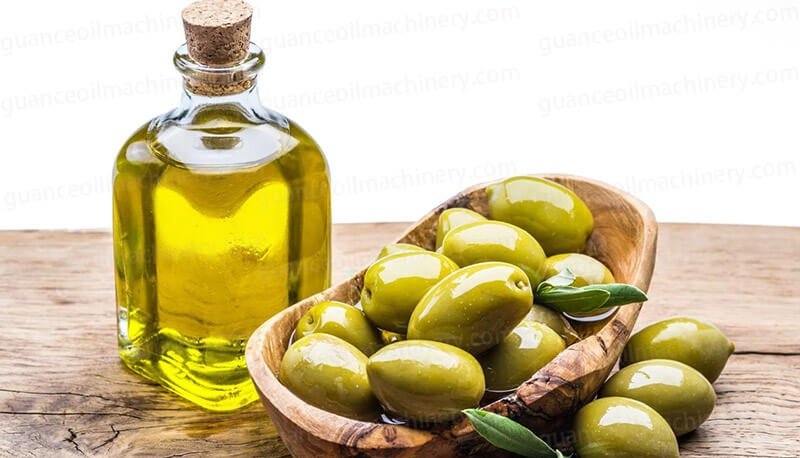
Renfining Rice Bran Oil
Overall Process Flow of Rice Bran Oil Processing Plant
1. Pretreatment workshop (cleaning, conditioning, drying).
2. Extraction workshop (solvent extraction of crude rice bran oil).
3. Refining workshop (physical refining & dewaxing of refined rice bran oil).
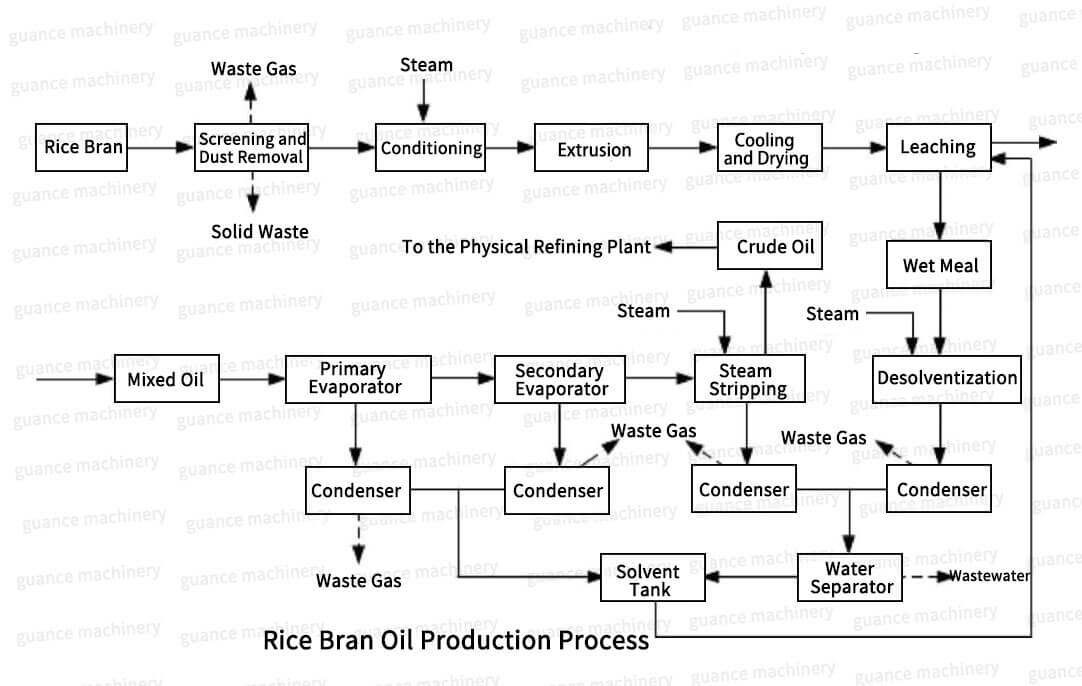
Rice Bran Oil Production Process
Pretreatment Workshop in a Rice Bran Oil Processing Plant
The pretreatment workshop prepares rice bran for while reducing enzyme activity and moisture fluctuation.
Step 1: Impurity Removal
Fresh rice bran first passes through a rotary screening machine, removing: Straw fibers, Rice husk fragments, Large foreign impurities etc.
Step 2: Particle and Sand Removal
A oilseed destoner machine removes: Sand, Small stones, Heavy inorganic particles etc.
Step 3: Conditioning
Cleaned rice bran enters a vertical steam cooker for: Heat conditioning, Partial lipase deactivation, Improved oil cell permeability etc.
Step 4: Moisture Adjustment
After conditioning, rice bran is dried using a continuous dryer: Final moisture: 8–10%, Uniform material flow to extraction section etc.
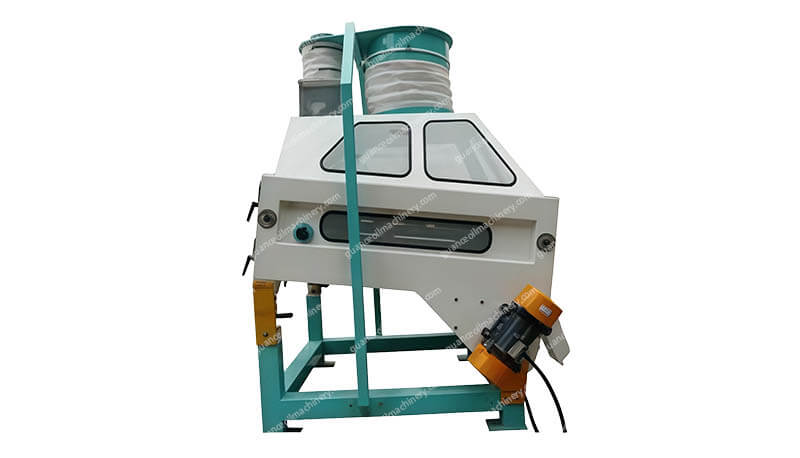
Destoner Machine
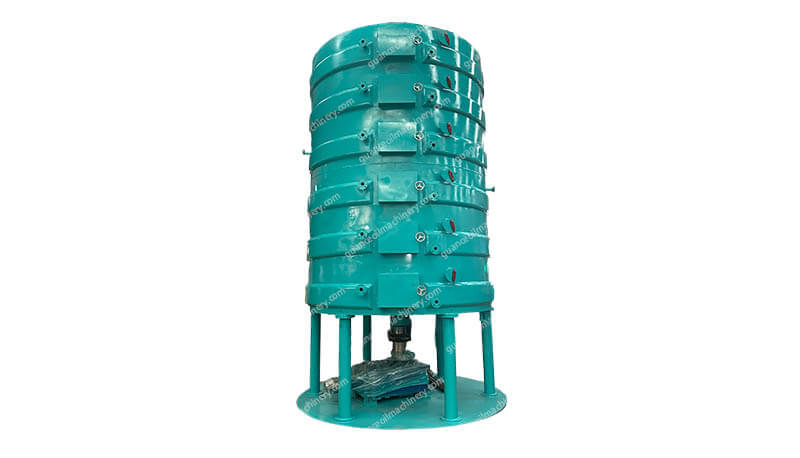
Cooker
Extraction Workshop: Solvent-Based Oil Recovery
At scale, solvent extraction is the standard configuration for rice bran oil processing plants.
Flat Rotary Extractor (Rice Bran Solvent Extraction)
The core equipment is a flat rotary extractor, designed for: Continuous solvent percolation, High extraction efficiency, Stable miscella concentration etc.
Key Advantages: Counter-current solvent flow, Uniform bed depth control, Residual oil in meal ≤1% etc.
Supporting Extraction Equipment
Include: Miscella circulation system, Evaporation and solvent recovery units, Meal desolventizing and drying system etc.
Defatted rice bran meal exits the extraction workshop for sold as animal feed sell.

Extractor
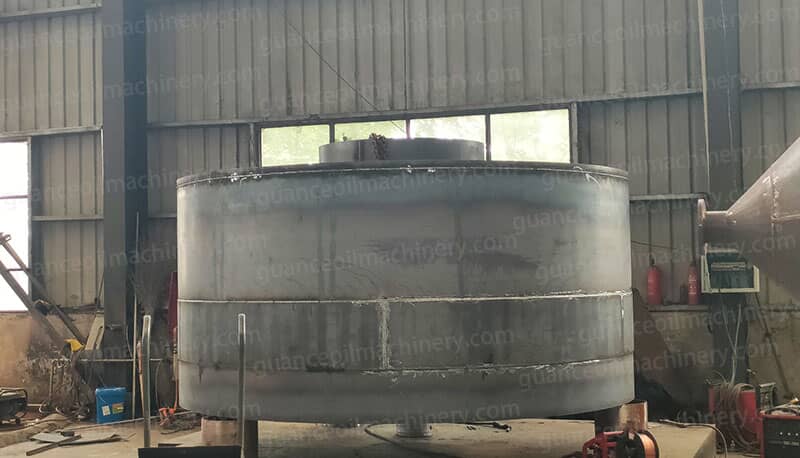
Manufacturing Extractor
Refining Workshop in a Rice Bran Oil Processing Plant
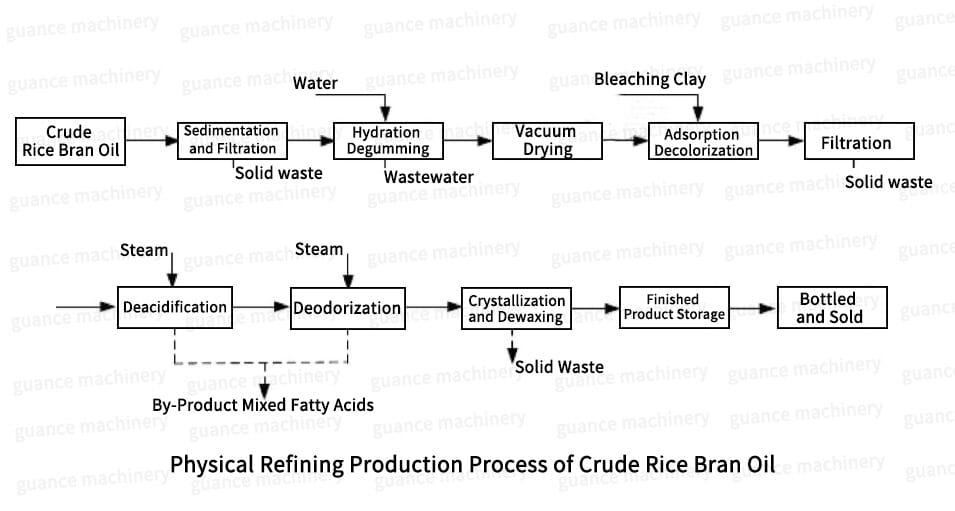
Physical Refining Production Process of Crude Rice Bran Oil
Degumming Equipment: Crude rice bran oil is first phosphoric is dosed, non-hydratable phospholipids are converted to hydratable form.
Gum Separation to Gums Tank: hydrated gums are separated by settling or centrifugation flow into a gums collection tank.
Vacuum Bleaching: degummed oil is residual moisture, soaps, and trace volatiles are removed, pigments, oxidation products, and metal ions are adsorbed.
Filtration: oil passes through a pressure leaf filter, spent bleaching earth is retained, clear, low-impurity oil exits the filtration equipment, transferred to a buffer oil tank.
Physical Deacidification & Deodorization Tower: oil free fatty acids are removed by direct steam stripping, odor-causing compounds are eliminated.
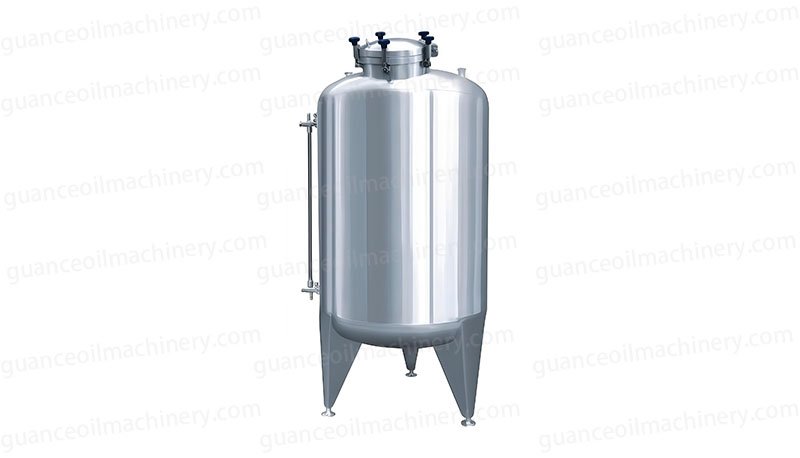
Degumming
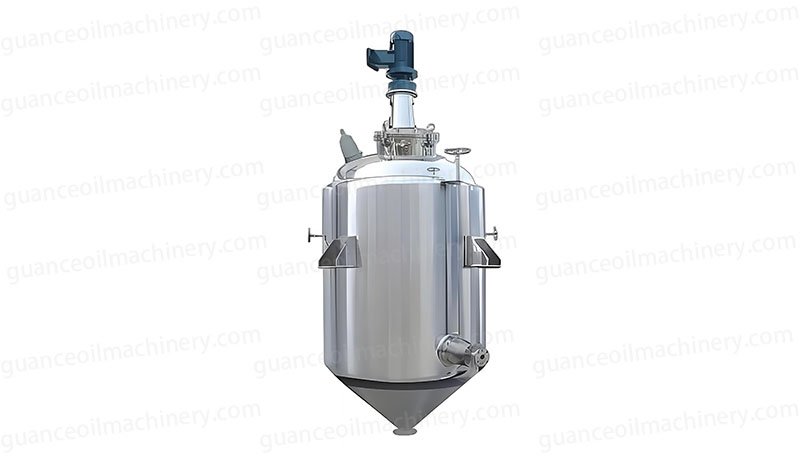
Decolorization
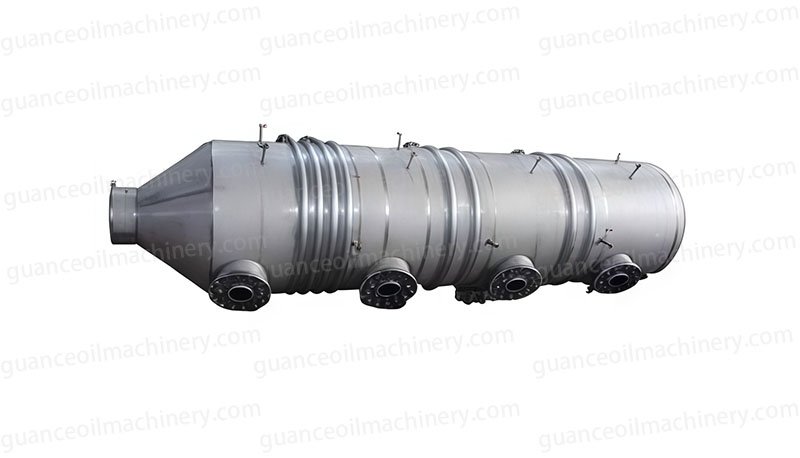
Deacidification
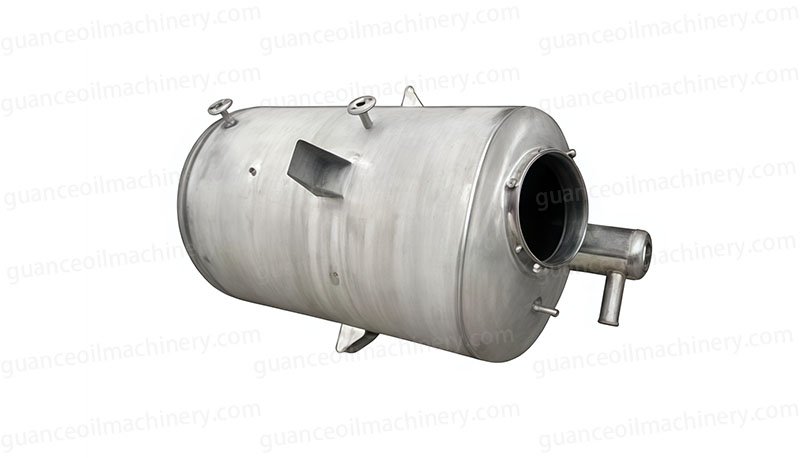
Deodorization
Winterization Dewaxing
Rice bran oil contains natural waxes that must be removed to ensure clarity.
Winterization dewaxing process includes: Controlled cooling crystallization, Wax crystal growth, Filtration or centrifugation etc.
Finished Oil Storage
Dewaxed and deodorized oil is transferred to finished oil tanks, ready for: Automatic bottling machine, Bulk loading, Export distribution etc.

Automatic Bottling Machine
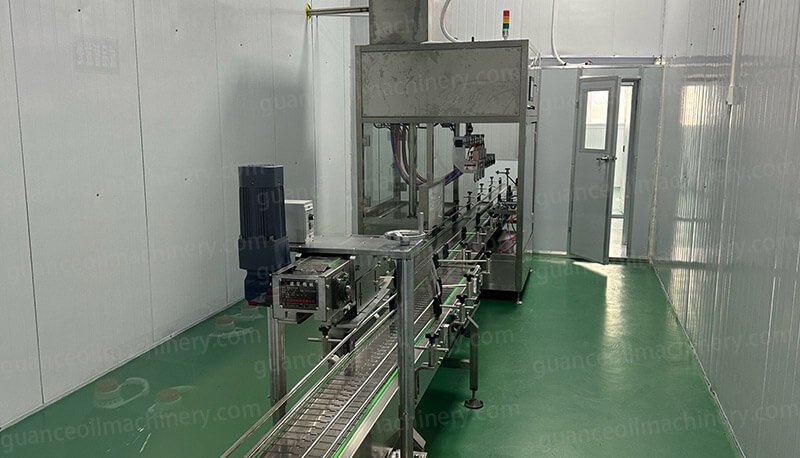
Automatic Bottling Of Finished Oil
Utility and Control Considerations (Example: 100 TPD Plant)
| Item | Typical Range |
|---|---|
| Steam consumption | 280–320 kg/ton oil |
| Electricity | 28–35 kWh/ton bran |
| Vacuum level | ≤5 mbar |
| Automation | PLC centralized control |
| This data is for reference only. | |
Rice Bran Oil Process of Advantages
1. Clear workshop separation improves safety.
2. Stable FFA control through early conditioning.
3. High oil yield with flat rotary extraction.
4. Dedicated dewaxing ensures market-grade clarity.
Guance Machinery designs each Rice Bran Oil Processing Plant based on real operating parameters, adapting equipment size and control logic to local raw material conditions.
Final Product
1. Refined Rice Bran Oil: used as premium edible oil, sold to food brands, bottlers, wholesalers, and retail distributors.
2. Crude Rice Bran Oil: used for further refining or oleochemical processing, sold to refineries and biodiesel producers.
3. Rice Bran Meal Fines: used as feed supplement or fermentation substrate, sold to feed processors and bio-fermentation plants.
4. Spent Bleaching Earth (Oil-Bearing): used for fuel blending or oil recovery, sold to cement plants and waste-to-energy operators.
5. Recovered Hexane: uecovered and reused as extraction solvent within the plant.
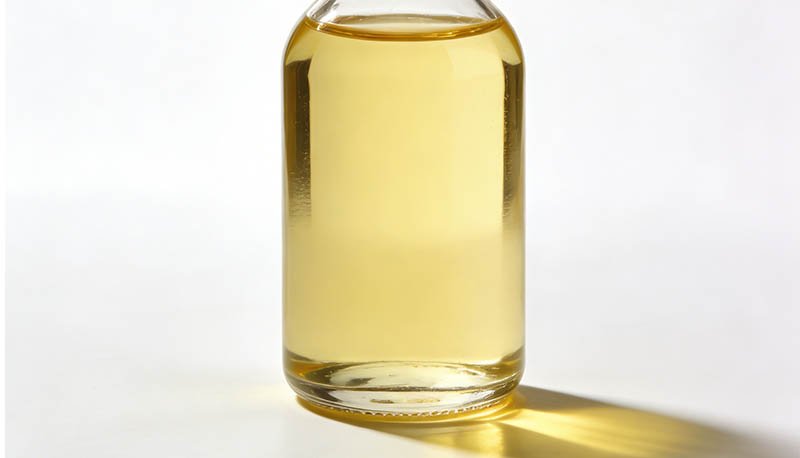
Standard Parameters of Production Line Rice Bran Oil
| Process | Parameter Name | Parameter Value |
|---|---|---|
| Feeding Rice Bran | FFA | 10% Max |
| Oil | 18% Min | |
| Crude Fiber | 15% Max | |
| Crude Protein | 15% Min | |
| Pre Processing | Rice Bran Oil | 18% |
| Rice Bran Moisture | 10% | |
| Solvent Extraction | Micessella Oil | 18% Max |
| Final Spray Oil | 0.5% Max | |
| Efficiency of Oil Extraction | 95% Min | |
| Hexane Loss 6 ltr for 1Mt of Raw Material | ||
| De Oiled Rice Bran Moisture | 10% Max | |
| Refining Process | Feeding Crude Oil FFA | 10% Max |
| Refined Oil FFA | 0.1% Max | |
| Refined Oil Moisture | 0.1% Max | |
| Remaining Oil Percetage of Gums | 50% Max | |
| Remaining Oil Percetage of Wax | 50% Max | |
| Remaining Oil Percetage of Spent Earth | 20% Max | |
| Remaining Oil Percetage of PFAD | 10% Max | |
| This data is for reference only. | ||

Rice Bran Oil Processing in FAQs
Q1: Why must rice bran be processed immediately after milling?
A: Because active lipase rapidly increases FFA, reducing oil yield and refining efficiency.
Q2: What is the typical oil content of fresh rice bran?
A: Fresh rice bran usually contains 16–22% oil, depending on rice variety and milling conditions.
Q3: Is rice bran oil suitable for physical refining?
A: Yes, properly degummed rice bran oil is well-suited for physical refining at industrial scale.
How Guance Machinery Integrates Into the Solution?
Contact us for a free consultation and equipment quote within 24 h.
Request a quote now!
📩 Get Your Free Quote Today
Contact us today to discuss your project, capacity requirements, and target materials. Our team will reply within 24 hours with a customized proposal. You can also reach us directly at guanceoilmachinery@gmail.com — we are here to help!