| Model | Softening (t/d) | Cooker (t/d) | Power (kW) | Area (m²) | Medium |
|---|---|---|---|---|---|
| VOSC120×4 | 20-40 | 10-20 | 15 | 11.2 | Steam / Thermal Oil |
| VOSC150×5 | 40-60 | 20-30 | 22 | 14.5 | |
| VOSC180×5 | 80-100 | 40-50 | 30 | 20 | |
| VOSC210×5 | 100-150 | 60-70 | 30 | 26.2 | |
| VOSC250×5 | 160-200 | 80-90 | 37 | 42 | |
| VOSC250×6 | 180-250 | 90-100 | 45 | 50.4 | |
| VOSC280×5 | 220-260 | 110-130 | 55 | 52 | |
| VOSC280×6 | 260-300 | 130-150 | 55 | 62 | |
| VOSC300×5 | 250-300 | 120-140 | 55 | 56.8 | |
| VOSC300×6 | 300-350 | 150-200 | 75 | 67 | |
| VOSC400×5 | 550-600 | 280-300 | 110 | 89.4 | |
| VOSC400×6 | 700-800 | 300-350 | 132 | 107 | |
| VOSC400×7 | 800-900 | 350-400 | 132 | 120 |
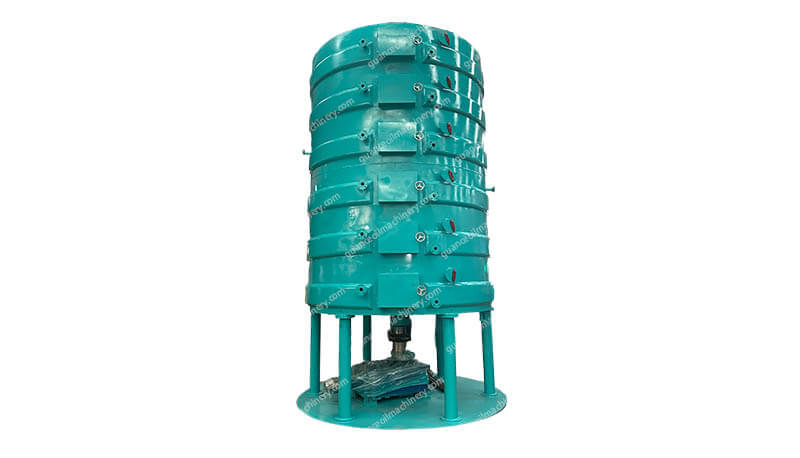
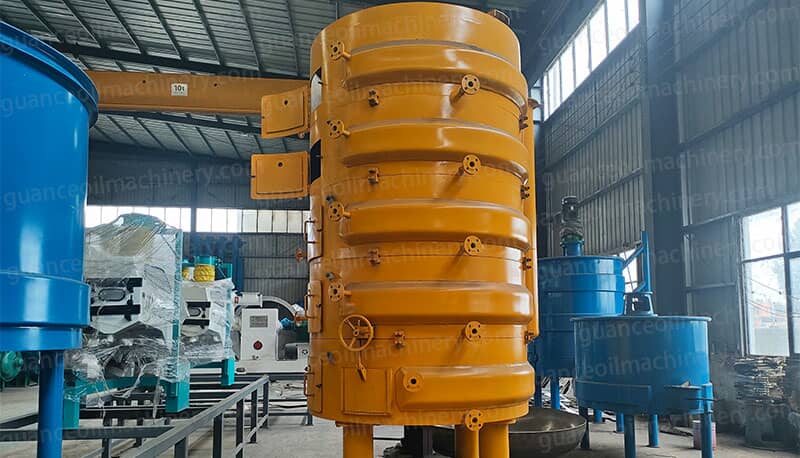
Vertical Oilseeds Steam Cooker uses steam (or sometimes heat‑conducting oil) to heat and hydrate oilseed flakes (such as soybean, canola, sunflower, cottonseed, peanuts, etc.) before oil pressing or solvent extraction.
This step improves flake plasticity, ensuring uniform moisture and temperature — which ultimately boosts oil yield and quality.
Why Use Guance Machinery Vertical Steam Cooker?
1. Better Heat & Moisture Control
The cooker has a jacketed design: each vertical layer has steam jackets on the sides and bottom, where indirect steam is introduced to gently heat the flakes.
An agitator in each layer mixes the material, distributing heat evenly and preventing hot spots.
For the first layer, some designs even spray direct steam through rotating pipes under the blades to finely control moisture addition.
2. Efficient, Continuous Operation
Vertical cookers operate continuously, making them suitable for medium to large-scale oil refinery plants.
Layered design (commonly 3–5 tiers) allows material to feed in from top and discharge from the bottom after fully processed.
Each layer can have its own exhaust device to vent evaporated vapor, optimizing the cooking process.
3. Space-Saving & Energy Efficient
Vertical footprint is compact relative to horizontal cookers, making it ideal when floor space is limited.
Because of its design, it can convert steam energy efficiently and minimize energy waste.
Also, gearboxes and drives are designed for durability, which reduces downtime and maintenance costs.
4. Customizable to Your Process
Number of layers (3–5) can be tailored depending on capacity and raw material.
Discharge gates at each layer can be automatic or manual, depending on your automation strategy.
Control over steam (via valves) and temperature allows you to fine-tune for different oilseeds solutions.
Key Technical Features & Design
| Component | Function / Purpose |
|---|---|
| Jacketed Shell | Each vertical layer has a steam jacket to provide indirect heating. |
| Agitator / Mixer | Ensures even mixing so all flakes are exposed evenly to heat. |
| Direct Steam Nozzle | In some designs (first layer), sprays direct steam for precise moisture control. |
| Level Sensors | Monitors material height in each layer — helps regulate flow and uniformity. |
| Discharge Gate | Can be automated; allows controlled output from each layer. |
| Vapor Exhaust | Vents evaporated water/steam to avoid pressure buildup and maintain stable conditions. |
| Drive / Gearbox | Often low noise, high durability; supports continuous operation. |
If you’re planning a vegetable oil processing line (whether for soybean, sunflower, rapeseed, or other oilseeds), Contact Guance Machinery for a free consultation and equipment quote within 24 h.
Vertical Oilseeds Steam Cooker Advantages
1. Improved Oil Yield: By ensuring the flakes are uniformly cooked and conditioned, the subsequent oil pressing or solvent extraction step extracts more oil.
2. Better Cake / Meal Quality: Proper steaming improves the plasticity of the seed flakes, so cakes are denser and more consistent.
3. Lower Maintenance Cost: Because of the robust design (gearbox, long-wearing materials, level sensors), the vertical cooker runs smoother and needs less frequent maintenance.
4. Scalable & Flexible: Suitable for a wide variety of oilseeds solutions – soybean, sunflower, rapeseed, cottonseed, peanuts, coconut, etc.
5. Energy Efficiency & Sustainability: Efficient steam use and compact design reduce energy consumption 20~30%.
Q1: Do I really need pilot trials before starting full-scale conditioning?
A: Yes. Small-batch tests let you lock in the right steam flow, cooking time, and final moisture so your flakes enter the oil press at peak plasticity.
Q2: What should operator training cover first?
A: Focus on safe steam-pressure settings, jacket drain routines, and agitator checks;
Q3: How often should I clean the conditioner to avoid fouling?
A: Build a quick daily rinse and a full deep clean into the shift log; regular wipe-downs stop sticky residues that block steam ports and cut heat transfer.