| Model Number | Yield (t/d) | Power (kW) | Broken Particle Size (mm) | Outline Dimensions (mm) | Weight (Ton) |
|---|---|---|---|---|---|
| YPSG200×500 | 30–50 | Main power: 4 Feeding power: 0.55 | 1/3 – 1/6 | 1300 × 750 × 1450 | 0.8 |
| YPSG250×800 | 80–120 | Main power: 7.5 × 2 Feeding power: 0.55 | 1/4 – 1/8 | 1840 × 880 × 1800 | 2.8 |
| YPSG250×1000 | 150–200 | Main power: 11 × 2 Feeding power: 0.75 | 1860 × 880 × 1800 | 3.0 |
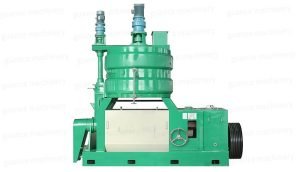
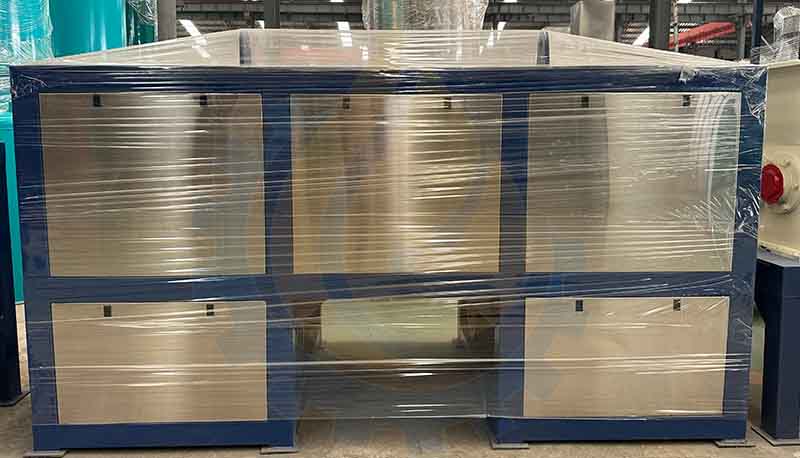
The crusher machine primary goal is to increase the surface area and adjust the particle size of seeds.
Which facilitates improved moisture and heat penetration during conditioning, better downstream pressing efficiency, and ultimately higher oil yield.
Why Use a Crusher Machine
1. Large seeds or pre‑pressed cakes may not process well in screw oil press or extraction; crusher machine ensures uniformity.
2. Without sufficient surface area, conditioning (moisture, heat) and extraction efficiency suffer.
3. Inadequate seed preparation can lead to incomplete oil release or variability in cake density, complicating oil solvent extraction or pressing.
4. Large, uneven seed pieces can oilseed flaking machine or screw oil press.
How Crusher Machine Works
Typical Crusher Types & Mechanisms
1. Toothed‑Roll Crusher (Double‑Roll Crusher): Two rollers with polygonal saw‑teeth crush seeds through a combination of impact and shear forces.
2. Smooth‑Roll (Glossy Roll) Crusher: Uses friction between two smooth rollers to crush smaller or medium‑sized oily seeds.
3. Hammer Mill (or Impact Crusher): High‑speed rotating hammers impact and grind seeds, breaking them into smaller particles.
Typical Crushing Process
1. Feeding: Raw oilseeds (or pre-pressed cakes) are continuously fed into the crusher’s hopper/feeder system.
2. Size Reduction: As seeds enter the crushing chamber, they are subjected to impact, shear, or friction, breaking them into smaller particles.
3. Output: Crushed material typically small granules, flakes, or fragments — emerges with a controlled and relatively uniform size distribution.
Applications in Oilseed / Edible Oil Processing
| Application | Description |
|---|---|
| Oil Pretreatment Production Line | For large seeds like soybean, peanut, palm kernel, and copra. Crushing ensures required size and softness before flaking, extrusion, or pressing. |
| Processing Pre-pressed Cakes / Residual Solids | Crushers reduce oilcake size for improved solvent leaching or secondary pressing in extraction plants. |
| Batch or Continuous Oil Refinery Production Lines | Suitable for multiple seeds: sesame, sunflower, soybean, peanut, palm kernel, copra, and more. |
| Benefits | Ensures uniform particle size, stable throughput, higher oil yield, and protects flakers, presses, and extractors from overload or wear. |
If you like — I can draft a technical spec sheet template for a Crusher Machine optimized for soy, peanut, and palm‑kernel oilseed processing (with adjustable roller gap, capacity ranges, and maintenance schedule).
Contact Guance Machinery for a free quote now.
Advantages of Crusher Machine
1. Delivering uniform, appropriately sized fragments.
2. Increasing surface area for optimal conditioning, pressing, or extraction.
3. Improving oil yield and quality.
4. Reducing wear or overload on downstream equipment.
5. Enabling stable, scalable production.
Q1: How do I choose the right crusher type?
A: Match seed size, hardness, capacity needs, and desired final particle size, or contact Guance Machinery.
Q2: Which materials can be processed by the crusher?
A: Soybean, peanut, palm kernel, copra, sunflower, sesame, fish trimmings, frozen meat, animal fat, and various pre-pressed cakes.
Q3: Why is crushing important before flaking or pressing?
A: It increases surface area, and boosts oil yield efficiency.