Model | Capacity (t/pot) | Power (kW) | Diameter (mm) | Volume (m3) |
|---|---|---|---|---|
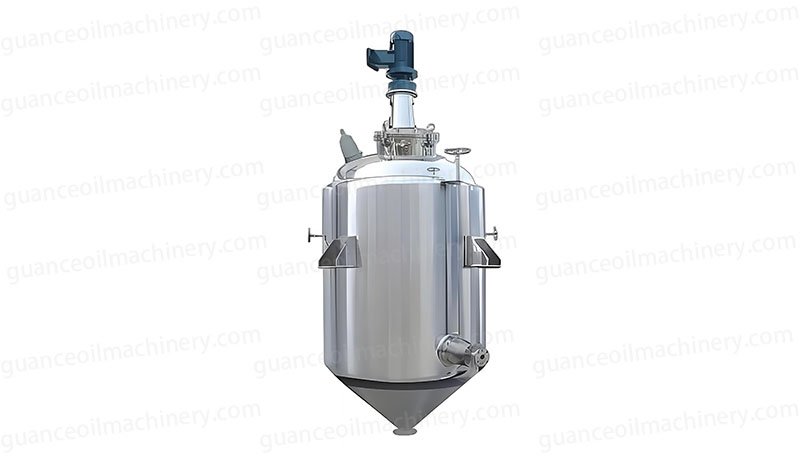
| GCTSG10 | 1-3 | 2.2 | Φ1200 | 4.5 |
| GCTSG20 | 3-5 | 3 | Φ1500 | 8.1 |
| GCTSG30 | 5-8 | 4 | Φ1800 | 12.5 |
| GCTSG40 | 8-10 | 5.5 | Φ2200 | 15 |
Oil decolorization equipment refers to the process of removing pigments and other colored compounds from crude oils, thereby enhancing the clarity and transparency of the oil.
This process typically occurs after the oil degumming equipment and neutralizing stages and is followed by deodorization.
The goal is to improve both the appearance and quality of oils, making them more attractive to consumers and ensuring their stability during storage.
Key Methods of Oil Decolorization
1. Activated Carbon Adsorption: Activated carbon or charcoal is added to the oil, where it adsorbs pigments and other impurities. The oil is then filtered to remove the carbon, resulting in a colorless or lightly colored oil.
2. Clay Adsorption (Bentonite): Bentonite or fuller’s earth is used as an adsorbent to remove pigments, oxidation products, and other impurities.
3. Silica Gel Adsorption: Silica gel can also be used in decolorization to remove colorants.
Features of Oil Decolorization Equipment
| Feature | Purpose |
|---|---|
| High-Efficiency Adsorption | These units are designed to maximize the contact between oil and decolorizing agents to ensure efficient pigment removal. |
| Temperature Control | Precise heating helps optimize the adsorption of pigments while preventing the degradation of oil quality. |
| Filtration | This ensures that the oil remains pure and free from impurities. |
Why Use Guance Machinery's Oil Decolorization Equipment
1. Type of Oil: Oils like soybean and sunflower oil often require white clay adsorption.
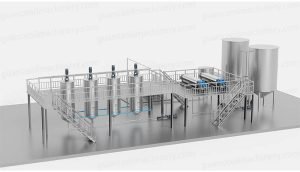
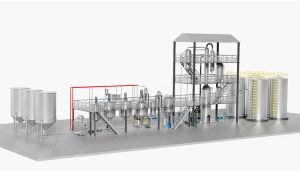
2. Scale of Production: For small to medium-scale operations, batch decolorization refining plant may be sufficient. Medium-larger operations may require semi-continuous oil refining for higher throughput and efficiency.
3. Quality Requirements: Different markets have varying standards for oil quality, particularly in terms of color.
4. Automation and Control: Semi-continuous or fully-continuous with advanced controls allow for greater consistency and less human intervention, which improves product quality and reduces labor costs.
If you are looking for top-tier oil decolorization equipment tailored to your specific refining needs, contact Guance Machinery today.
Oil Decolorization Equipment Advantages
1. Improved Oil Appearance: By removing undesirable pigments, the oil becomes clear and visually appealing.
2. Enhanced Oil Quality: The removal of colorants can also help reduce the presence of oxidation products, improving the stability and shelf-life of the oil.
3. Higher Consumer Appeal: Clear, colorless oils are often perceived as higher quality, which can help improve sales and market share.
4. Cost Savings: Efficient decolorization can reduce waste, enhance oil yield, and lower energy consumption, resulting in cost savings over time.
Q1: How does oil decolorization improve oil quality?
A: Oil decolorization removing these unwanted pigments compounds, the oil becomes clearer, more stable, and longer-lasting.
Q2: What types of oils require decolorization?
A: Oils such as soybean, sunflower, rapeseed, and palm oil often contain pigments like chlorophyll.
Q3: Can oil decolorization equipment be used for small-scale operations?
A: Yes, there are batch processing systems that are ideal for small-scale operations. For larger operations, continuous systems provide higher throughput and efficiency.