| Model | Filtration Area/m² | Air Volume/m³/h | Power/kW |
|---|---|---|---|
| GSBD-24-100 | 9.6 | 518 | 0.75 |
| GSBD-80-100 | 32 | 1728 | 3 |
| GSBD-100-150 | 60 | 3240 | 4 |
| GSBD-180-150 | 108 | 5832 | 7.5 |
| GSBD-260-150 | 156 | 8424 | 11 |
| GSBD-260-200 | 208 | 11232 | 15 |
| GSBD-320-200 | 256 | 13824 | 15 |
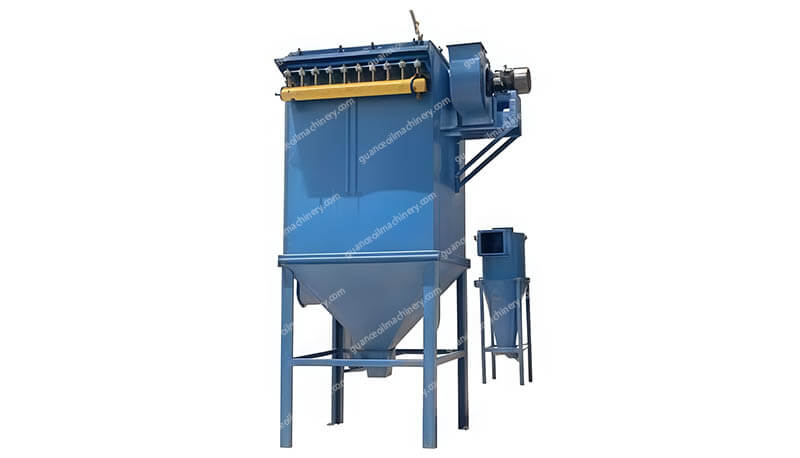
Pulse dust collectors are essential equipment in oil processing plants, especially in facilities where materials like oilseeds, meal, and other particulate matter are handled.
These systems effectively capture and remove dust particles from the air, ensuring a cleaner, safer working environment.
In addition to enhancing air quality, pulse dust collectors help optimize the efficiency of production processes, reduce maintenance costs, and improve overall operational safety.
Why Choose Guance Machinery's Pulse Dust Collector?
1. Airflow Capacity: The size and design of your pulse dust collector should be chosen based on the airflow capacity required by your facility.
2. Filter Efficiency: Our high-efficiency filters for capturing fine dust particles, which are commonly present in oil pretreatment and meal solvent extraction.
3. Energy Efficiency: The pulse dust collectors rely on fans and compressed air, we with features like optimized fan designs and low-energy pulse jet cleaning.
Working principle of a Pulse Dust Collector
1. Filter Bags or Cartridges: The heart of the dust collection system, these filter elements capture dust particles from the air as it passes through.
2. Pulse Jet Cleaning System: A system of valves and compressed air lines that delivers bursts of air to clean the filter bags, removing the accumulated dust.
3. Fan or Blower: Creates the necessary airflow to move the air through the dust collector, drawing in particulate-laden air and pushing out clean, filtered air.
4. Dust Hopper: Collects and stores the dust that has been removed from the air, which can be disposed of or recycled depending on the application.
Common Applications of Pulse Dust Collectors
| Feature | Purpose |
|---|---|
| Oilseed Pressing | When seeds like soybeans, sunflower seeds, or rapeseed are crushed, a significant amount of dust is generated. |
| Meal Solvent Extraction | After oil extraction, the remaining meal often contains fine particles. |
If you’re looking for a reliable and efficient dust collection solution for your oil refining plant, contact Guance Machinery today.
Pulse Dust Collector Advantages
1. Improve the cleanliness of raw materials: Pulse dust collector is one of the primary benefits remove dust from raw materials.
2. Enhanced Operational Efficiency: Pulse dust collectors maintain optimal airflow through their self-cleaning filter technology, reducing the frequency of manual cleaning.
3. Reduced Downtime: The pulse jet cleaning mechanism ensures that filters remain clean without the need for frequent shutdowns.
4. Compliance with Regulatory Standards: Pulse dust collectors compliance with your country laws.
5. Cost Savings: By preventing dust accumulation and reducing maintenance time, pulse dust collectors contribute to lower operational costs.
Q1: What is the main advantage of using a pulse dust collector in oil processing?
A: The efficiently remove dust and particulate matter from the air, improving air quality, reducing maintenance costs, and enhancing overall operational efficiency.
Q2: How does the pulse cleaning mechanism work?
A: The pulse cleaning mechanism uses bursts of compressed air to clean filter bags or cartridges, removing accumulated dust.
Q3: Are pulse dust collectors suitable for small-scale operations?
A: Yes, pulse dust collectors can be scaled to meet the needs of both large and small-scale operations.