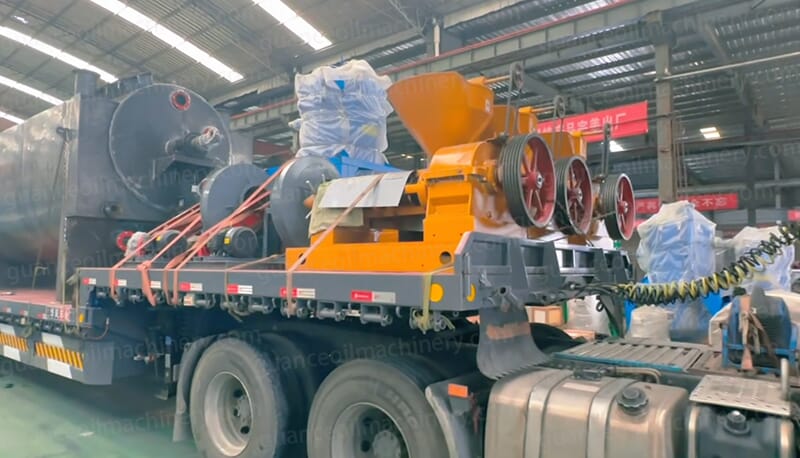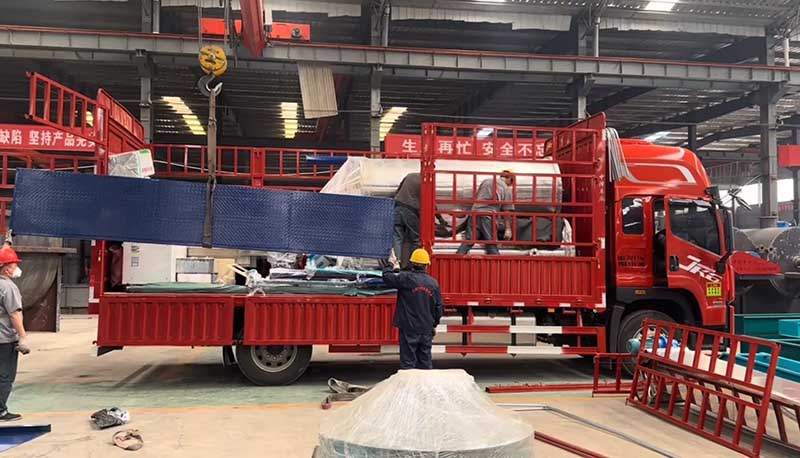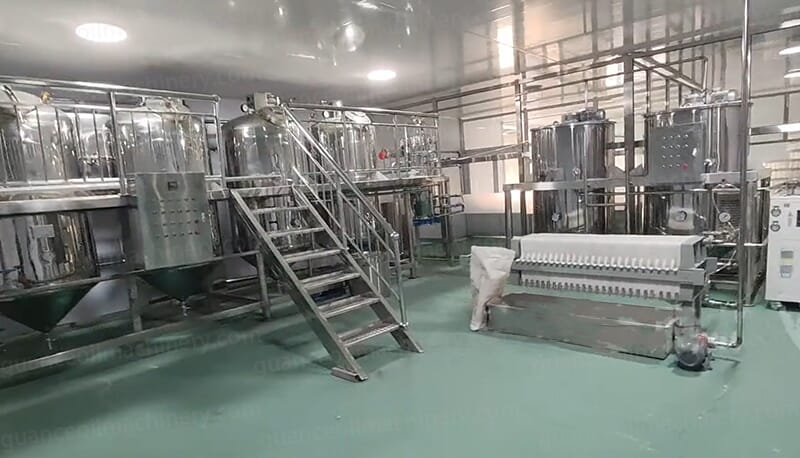
In this palm oil refinery project, the core focus is on Palm Oil Refining Equipment — covering crucial units such as Oil Degumming Equipment, Oil Deacidification Equipment, Oil Decolorization Equipment, and Oil Deodorization Equipment.
Guance Machinery supplied a full-fledged refining line tailored to crude palm oil, enabling the customer in Thailand to convert raw oil into clean, edible-grade palm oil with stable quality and long shelf life.
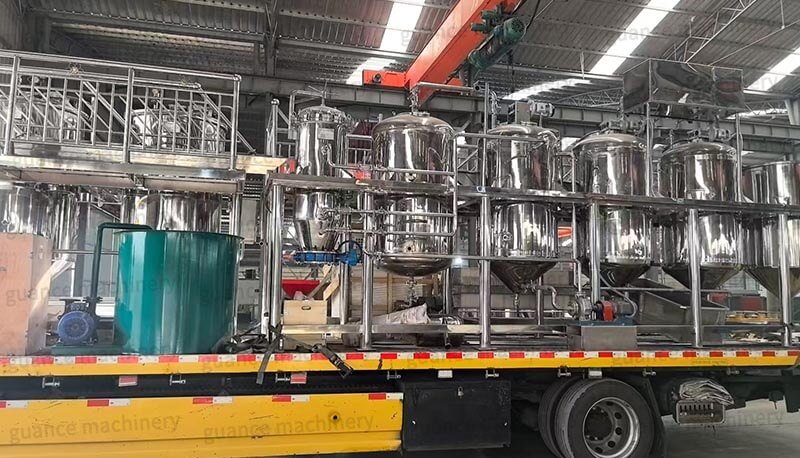
Refining Process for Palm Oil: Key Stages & Equipment
Based on industry-standard refining flows and practical engineering experience, the palm oil refining process supplied in this project proceeds through four main stages.
| Stage | Purpose / What’s Removed | Main Equipment Supplied |
|---|---|---|
| Degumming | Removes phospholipids, gums, colloidal impurities that cause turbidity or sediment, and affects stability. | Oil Degumming Equipment (hydration or acid-degumming pot) |
| Deacidification (Deacid / Neutralization) | Reduces Free Fatty Acids (FFA), lowers acidity, improves stability & shelf-life; essential for edible-oil standards. | Oil Deacidification Equipment (alkali neutralization tank, soapstock separation) |
| Decolorization (Bleaching) | Removes pigments, trace impurities, oxidation products — leading to clear, bright oil appearance acceptable to consumers. | Oil Decolorization Equipment (bleaching pot, activated clay dosing, vacuum filtration / leaf filter) |
| Deodorization | Removes odor, volatile compounds, residual impurities — ensures clean smell and taste, stability, and compliance with food-grade requirements. | Oil Deodorization Equipment (vacuum steam deodorizer, condensers, heat-exchangers) |
Why This Refining Line Matters: Advantages & Value for Customer
Meets edible‑oil standards: By implementing the full refining route, the output palm oil meets clarity, acidity, color, odor.
Flexibility with palm oil: Because palm oil refining follows the generic edible‑oil refining flow, the same line can often handle other vegetable oils (soybean, sunflower, etc.) if configured appropriately — giving flexibility for seasonal or raw‑material changes.
Reduced impurities, improved shelf life and sensory quality: The four‑stage refining removes gums, FFA, pigments and odors — producing oil that resists rancidity, remains clear after storage, and is acceptable in consumer markets.

Key Considerations and Best Practices Drawn from This Project
From Guance Machinery’s experience with the palm oil refinery, several practical lessons have proven important:
Ensure correct degumming method: For palm oil, hydration or acid‑degumming are common — choice depends on crude‑oil composition and phospholipid content.
Control alkali dosage and soapstock separation carefully: Over‑neutralization or incomplete separation leads to oil losses or residual soap.
Use high-quality bleaching clay and efficient filtration: The bleaching (decolorization) step strongly affects oil color. Adequate clay amount, proper mixing under vacuum, and filtration (e.g. leaf filter) ensure brightness and clarity.
Precisely control deodorization parameters: Temperature, vacuum level, steam sparge and residence time must be optimized.
Contact us
As a machinery supplier experienced in such turnkey projects, Guance Machinery can support with equipment selection, process design, installation guidance, and commissioning.
If you like, please contact us immediately.
📩 Get Your Free Quote Today
Contact us today to discuss your project, capacity requirements, and target materials. Our team will reply within 24 hours with a customized proposal. You can also reach us directly at guanceoilmachinery@gmail.com — we are here to help!