Groundnut Oil Processing Plant — Complete Solution for Mechanical Pressing + Solvent Extraction
A Guance Machinery Groundnut Oil Processing Plant typically combines mechanical pressing and solvent extraction to maximise oil recovery while preserving flavor for high-value edible oil.
Raw Materials to Finished Oil Legend
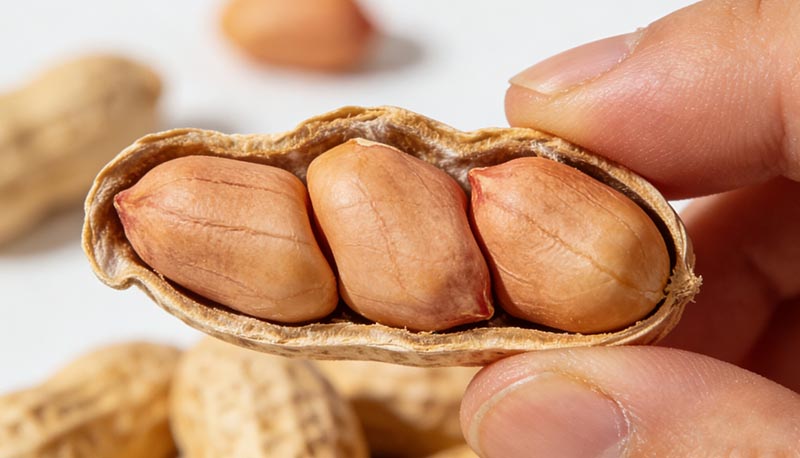
Groundnut
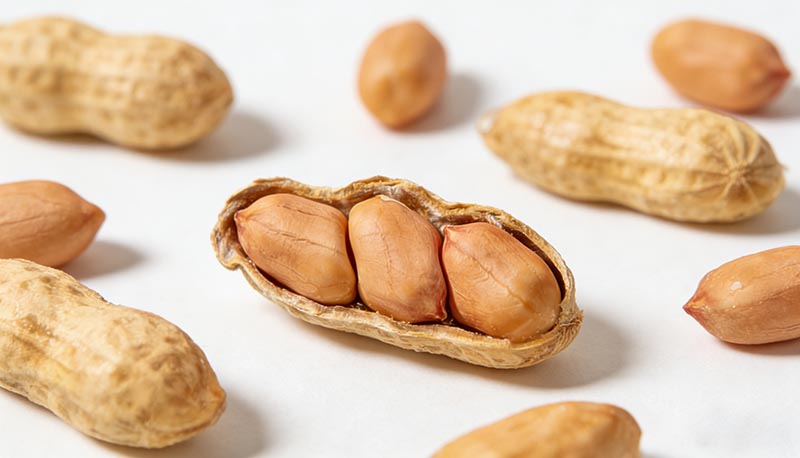
Cleaning Groundnut
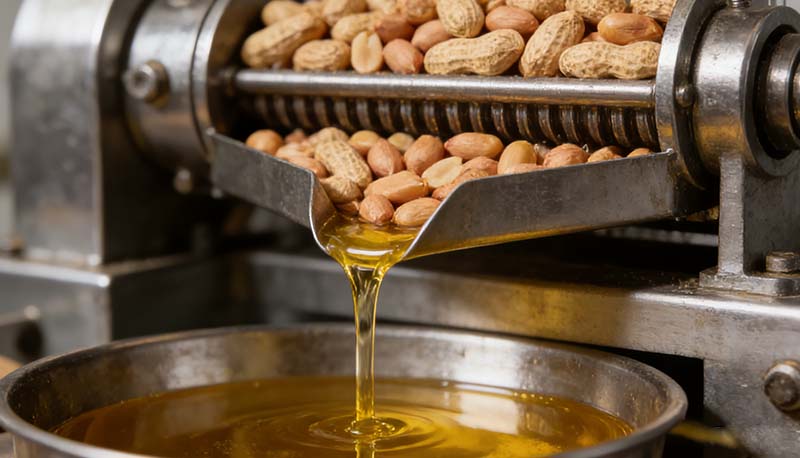
Groundnut Oil Pressing
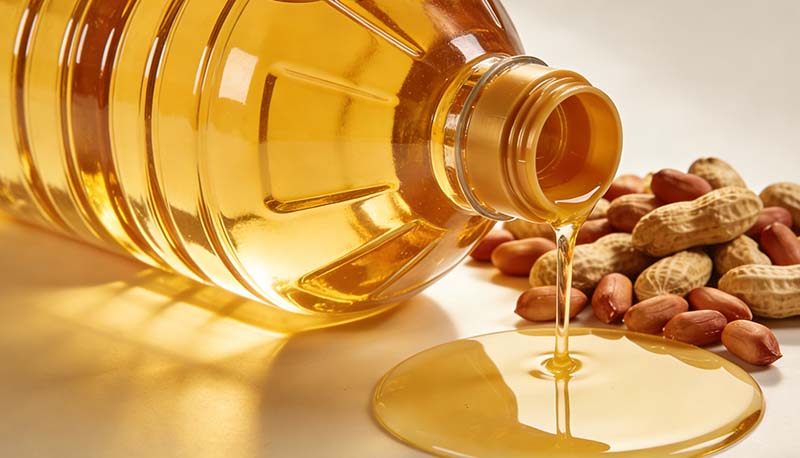
Groundnut Oil Refining
Step-by-Step Groundnut Oil Processing Flow Chart
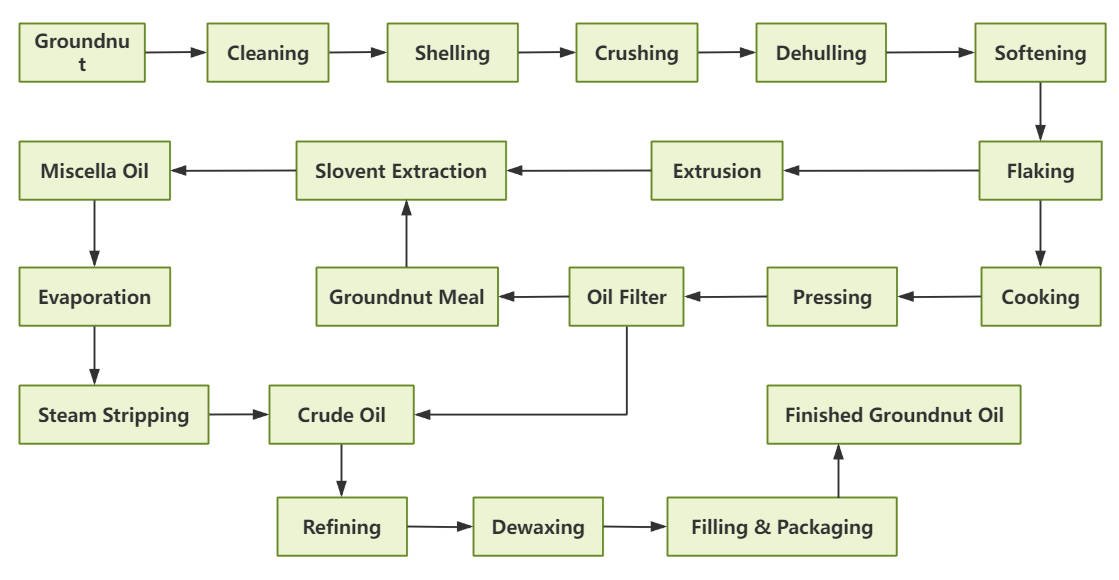
Groundnut Oil Processing Steps
Process summary (single line)
Groundnut oil pretreatment → cooker / conditioning → pre-press & final pressing → crude oil (press) → crude oil → semi-continuous refinery → packing (automatic bottling) → finished oil
Parallel stream for cake
Press cake → solvent extraction → desolventizing → crude extract → refinery → finished oil; residual dry meal → animal feed.
This hybrid screw oil press + solvent extraction route is the industry standard for medium→large plants because pressing preserves flavor and solvent extraction recovers remaining oil for higher overall yield.
Groundnut Oil Extraction and Refining Process
Below each stage lists function, typical equipment, operational targets and practical tips.
Raw material receiving & cleaning
Cleaning Debris: By Destoner & Pulse Dust Collector remove stones, mud, sticks, foreign seeds and oversized debris.
Targets: foreign matter <0.5%, moisture suitable for storage (≤10% depending on local climate).
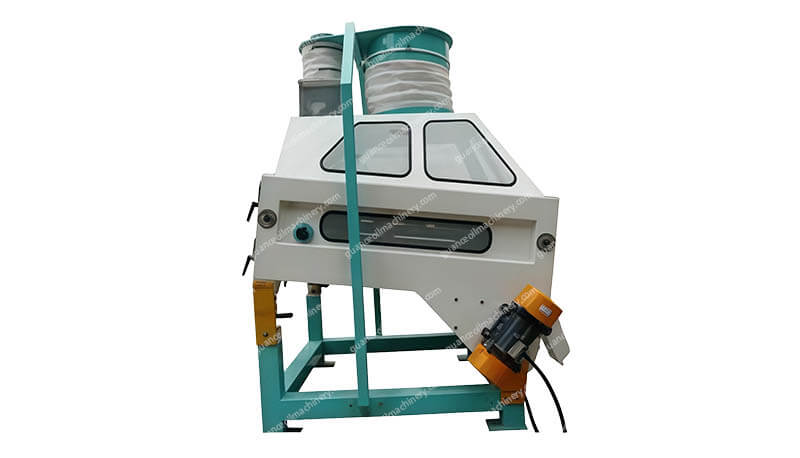
Destoner Machine
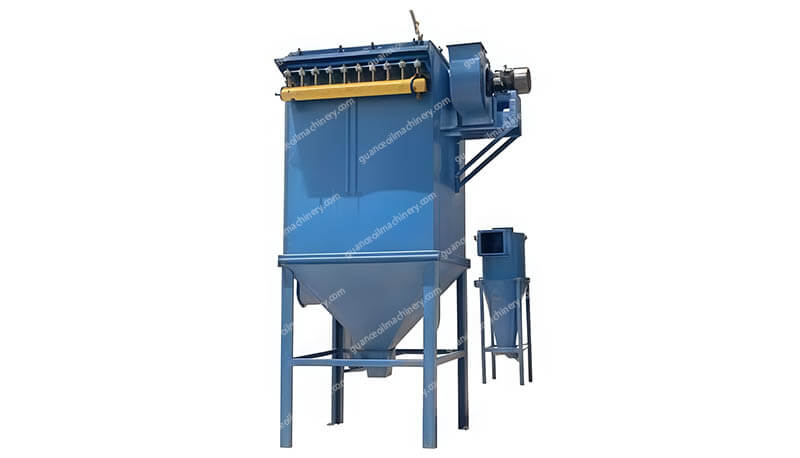
Pulse Dust Collector
Oil Pretreatment
Purpose & why it matters: Proper pretreatment reduces hulls, increases kernel surface area and conditions lipids/proteins so pressing releases oil efficiently.
Dehulling / shelling: disc sheller or sheller machine.
Crushing & flaking: Crushing → oilseed flaking machine to form flakes.
Conditioning: steam cooker / continuous steamer or stir-fry cooker (control to 80–120°C depending on process).
Target moisture after conditioning: 6–8% for press feed.
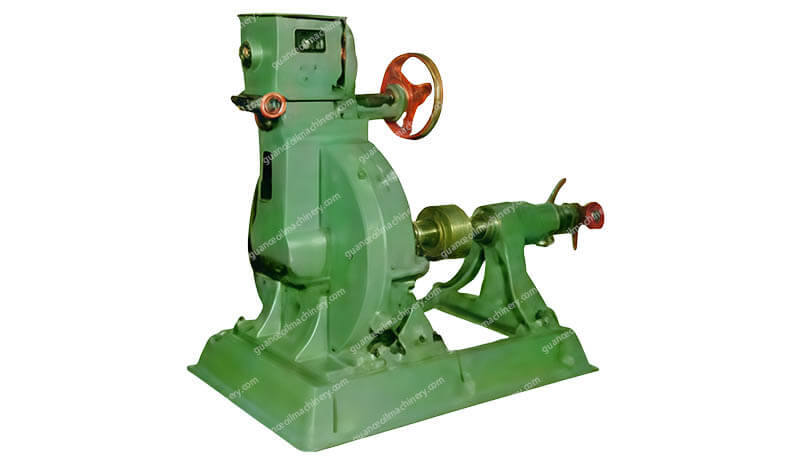
Sheller Machine
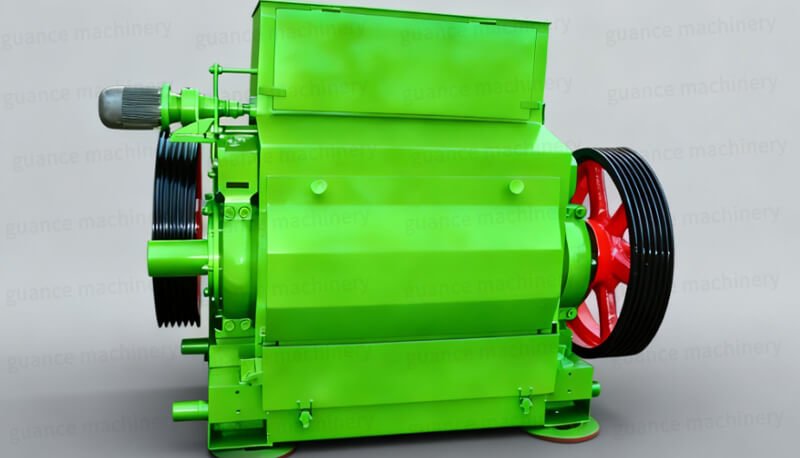
Oilseed Flaking Machine
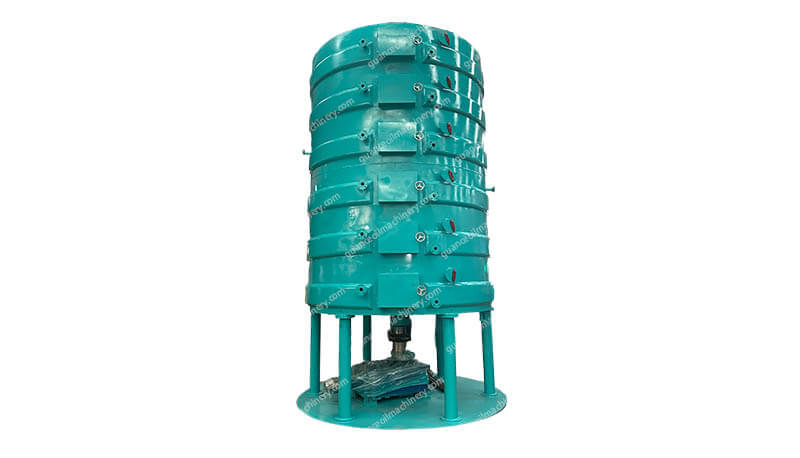
Cooker
Oil Pressing & clarification
Screw Oil Press: reduces moisture, releases most free oil. Single pass expellers often leave 14–22% residual oil in cake. For Oil Cake Solvent extraction.
Filtration: plate/leaf filter or centrifuge for solids removal from press oil.

Screw Oil Press

Centrifuge
Solvent extraction of press cake
When to use: Medium→large plants seeking maximum recovery.
Press cake moisture must be controlled (around 6–8% for spraying systems, or \~8% for immersion) and particle size suitable for extractor.
Hexane is the most common solvent; extraction trains include extractor → desolventizer-toaster → solvent recovery (evaporator/stripper → condenser).
Oil Refining Process
Design tips, control residence times, temperatures and vacuum level in deodorization to protect flavor and fatty acid profile.
For groundnut oil used as culinary oil, deodorization temperature is often lower to retain taste while meeting odour specs.
Degumming: Hydration (hot water or acid) to remove phospholipids and some pigments.
Neutralization: Alkali (NaOH) treatment to remove free fatty acids (FFAs) — controls FFA to desired specification.
Bleaching: Adsorbent clay to remove color compounds, trace metals and oxidation products.
Deodorization: Steam distillation under vacuum to remove volatile off-odors and further decrease FFA if required.
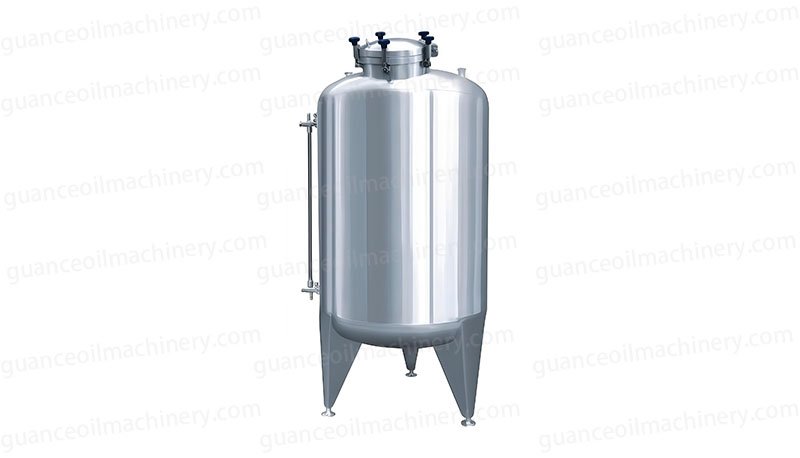
Degumming
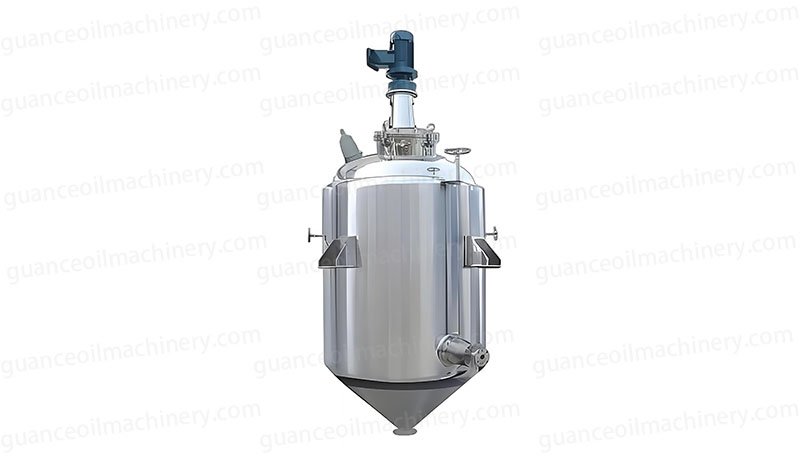
Decolorization
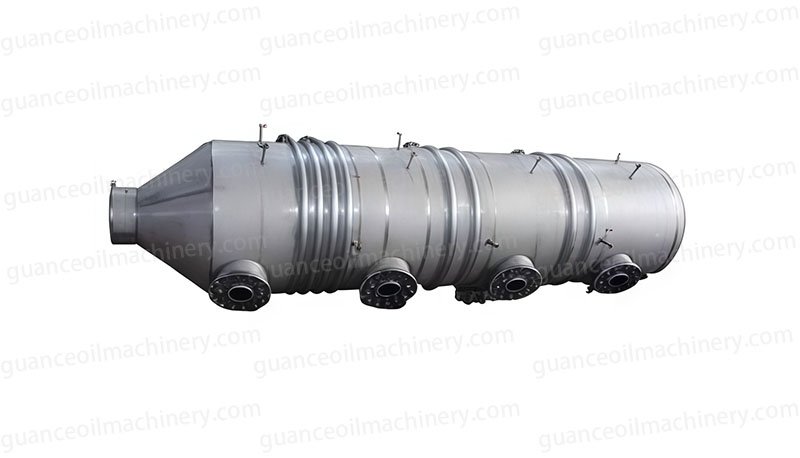
Deacidification
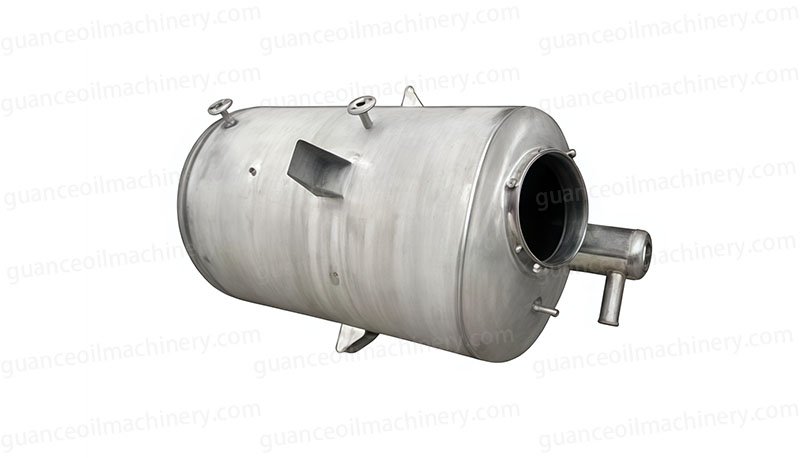
Deodorization
Groundnut Oil Processing Bottling Process
Bottling: Use a Groundnut Oil Automatic Bottling Machine integrated with rinsing/filling/capping/labeling lines for retail products.
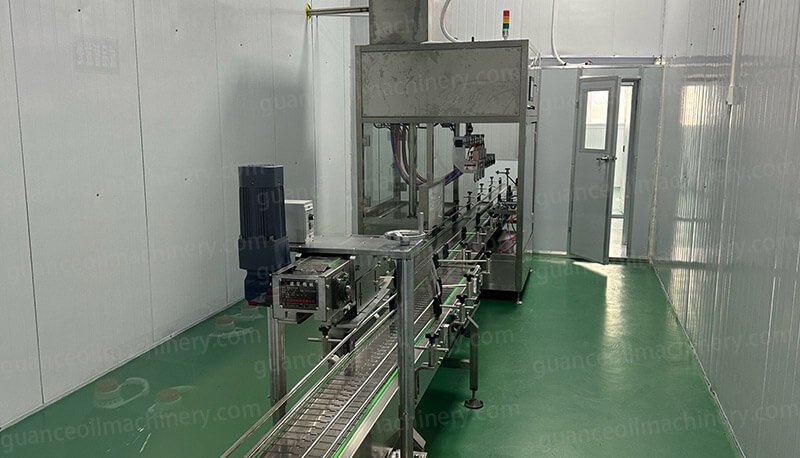
Automatic Bottling Of Finished Oil

Automatic Bottling Machine
By-product handling (groundnut oil meal → animal feed)
From pressing + extraction: Dry cake (after D-T) becomes animal feed or ingredient for pelleting.
Typical residual oil in meal after solvent extraction is <1–2%.
Ensure meal meets local feed regulations (moisture, solvent residue).
Thermal treatment in the D-T also improves sanitary quality.
Final Product
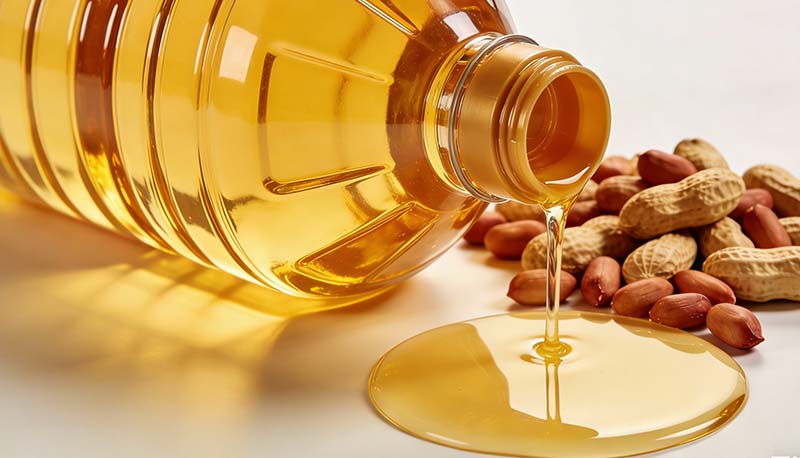
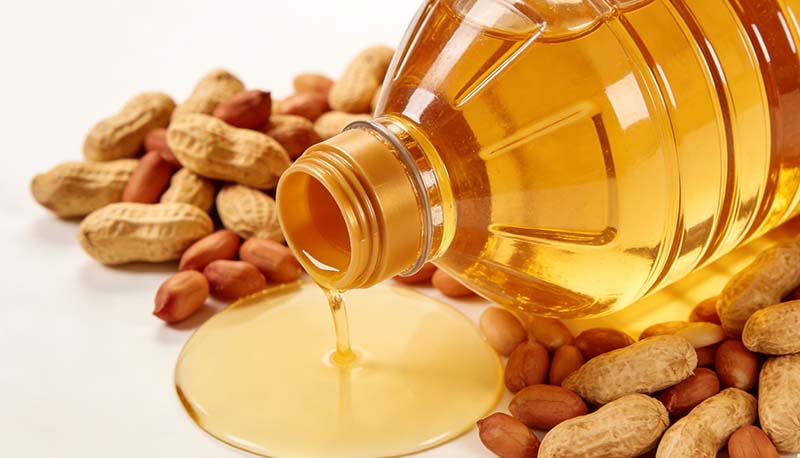
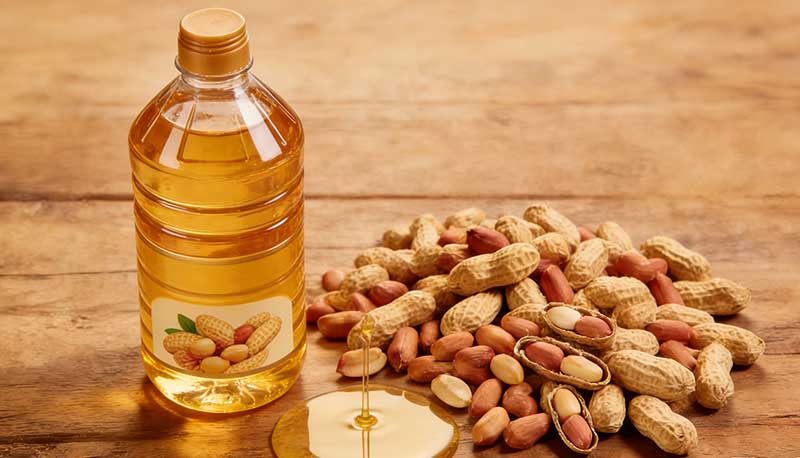
1. Groundnut Oil: It is a refined edible oil used for cooking and frying. The oil has a high smoke point and a pleasant aroma. It is popular in homes, restaurants, and food industries.
2. Groundnut Oil Cake / Meal: Groundnut oil cake is use it, cattle, and fish feed. It offers strong market demand. This by-product brings steady profit.
3. Groundnut Acid Oil: The product is used in biodiesel production and feed fat additives. It also supports several industrial chemical processes. The market demand is stable.
4. Groundnut Shells: Are a useful biomass material. They are widely used as carbon-neutral boiler fuel, organic fertilizer and activated carbon.
Quality Indicators of refining Groundnut Oil
| Item | Unit | Edible Grade 1 | Edible Grade 2 |
|---|---|---|---|
| Free Fatty Acid (FFA) | % | ≤ 0.05 | ≤ 0.10 |
| Moisture & Impurities | % | ≤ 0.10 | ≤ 0.15 |
| Color (Lovibond 5¼") | R | ≤ 3.0 | ≤ 5.0 |
| Cloud Point | °C | ≤ 5 | ≤ 7 |
| Peroxide Value | meq O₂/kg | ≤ 1.0 | ≤ 2.0 |
| Iodine Value | g I₂/100g | 85 – 100 | 80 – 100 |
| Saponification Value | mg KOH/g | 188 – 194 | 186 – 198 |

Frequently Asked Questions About Groundnut Oil Processing Solutions
Q1: What equipment is needed for groundnut oil processing?
A: A full line includes cleaning, crushing, pressing, filtration, and oil refining machines.
Q2: How much oil can groundnuts produce?
A: Groundnuts usually yield 40% to 50% oil depending on quality and moisture.
Q3: What is the cost of a groundnut oil processing line?
A: Cost varies by capacity, automation level, and included refining equipment.
Ready to build your groundnut oil mill?
Contact us for a free consultation and equipment quote within 24 h. We offer services ranging from oil presses to production lines and complete plant construction!
Request a quote now!
📩 Get Your Free Quote Today
Contact us today to discuss your project, capacity requirements, and target materials. Our team will reply within 24 hours with a customized proposal. You can also reach us directly at guanceoilmachinery@gmail.com — we are here to help!