Vegetable oil is an essential component of our daily diet.
Vegetable oil production is a complex and delicate process, transforming plant essences into edible oil.
The key steps in vegetable oil production, from raw materials to refining, revealing the production process.
Preliminary Processing of Vegetable Oil: Cleaning and Shelling
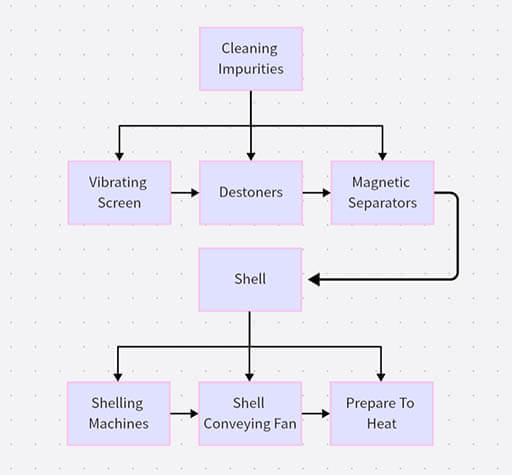
The first steps in vegetable oil pretreatment production line are cleaning and shelling, which affect the quality of the oil.
Oilseed crops often contain impurities, Guance Machinery remove using vibrating screens, destoners, and magnetic separators.
Mechanized operations improve oil purity, laying the foundation for subsequent processing.
The hulls of oilseeds like sunflower seeds are high in cellulose, which affects the quality of the oil.
Shelling is crucial, and Guance Machinery use shelling machines to separate the hulls from the kernel.
Wind separation of the hulls ensures a pure kernel, increases oil content, and enables more efficient extraction.
Preliminary Oil Extraction: Heating and Pressing
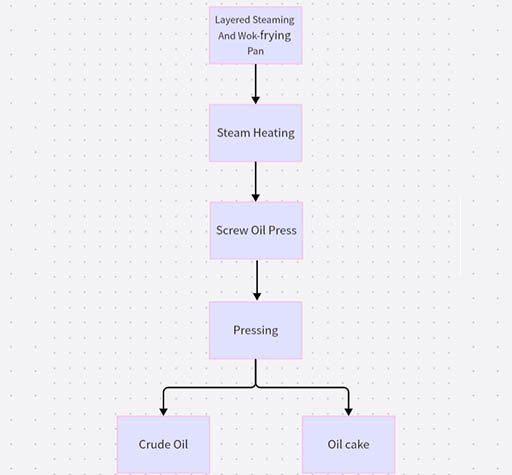
After cleaning and shelling, the vegetable oil enters the heating and pressing stage.
This is the core step in vegetable oil pressing plant, aimed at separating the oil. Guance Machinery heat and steam the oilseed by steaming to disrupt its cell structure, reduce oil viscosity, and increase oil yield, ensuring oil quality.
The tempered oilseed is then pressed through a screw press to squeeze out the crude oil, forming an oil cake.
The pressing method preserves the natural flavor. The oil cake still contains oil, so to increase oil yield, it is deeply extracted. Heated pressing is key to obtaining the initial oil.
Deep Oil Extraction: Solvent Extraction of Oil Cake
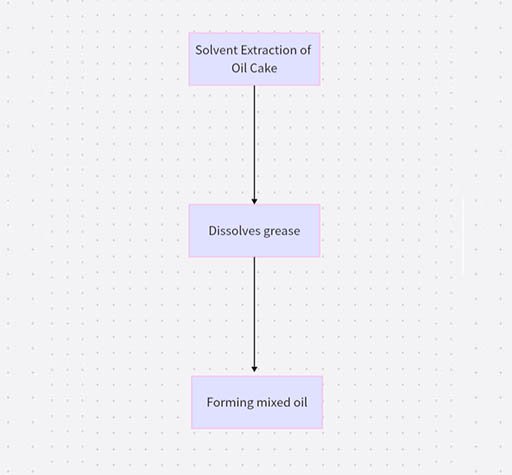
To fully utilize the oil contained in the pressed oil cake, Guance Machinery use oil solvent extraction.
Organic solvents dissolve the oil, forming a mixed oil, and the oil cake becomes meal.
Solvent extraction increases the value of the oilseed, but you must completely remove the solvent to guarantee the safety of the vegetable oils.
Solvent Removal: Steam Removes Impurities
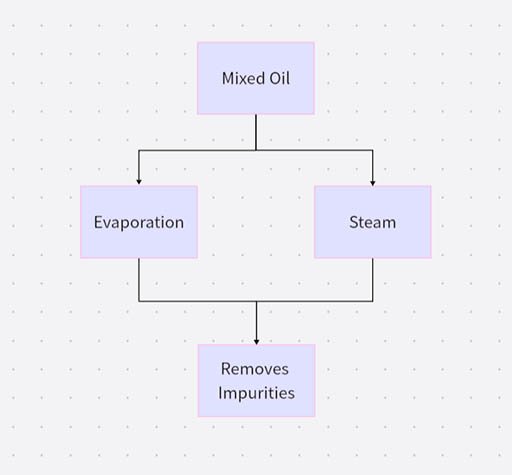
The mixed oil after solvent extraction contains a large amount of organic solvent, and you must completely remove it.
Guance Machinery use evaporation and steam stripping techniques to separate the solvent using steam.
Evaporation recovers the majority of the solvent, while steam stripping removes trace residues. This ensures the safety of the vegetable oil and prepares it for subsequent refining.
Vegetable Oil Refining: The Key to Improving Quality
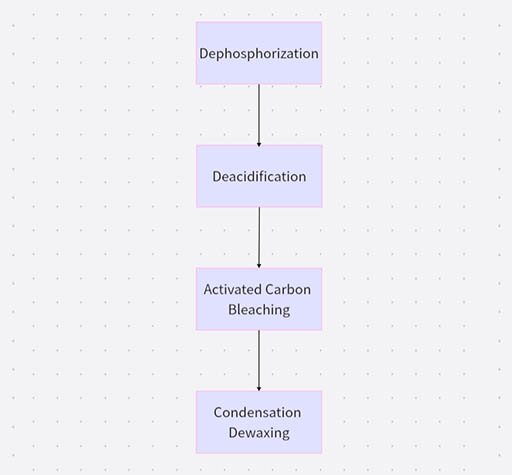
Crude oil contains impurities such as phospholipids, fatty acids, and pigments, which affect the quality of the oil.
Semi-Continuous Oil Refinery Plant: Deacidification, dephosphorization, bleaching, and dewaxing are performed to remove harmful impurities and produce refined vegetable oils that meets food standards.
1. Dephosphorization
Dephosphorization is the first step in refining, removing phospholipids from crude oil that affect stability and foam.
Manufacturers first use hydrochemical or acid dephosphorization to coagulate and precipitate the phospholipids; Next, they remove the solids through centrifugation. As a result, dephosphorization significantly improves oil stability.
2. Deacidification
Deacidification removes free fatty acids from crude oil that affect flavor and stability.
Alkali refining or physical deacidification are commonly used. Alkali refining uses alkali neutralization, while physical deacidification uses steam stripping. Deacidification reduces the acid value of the oil and improves its taste.
3. Activated Carbon Bleaching
Bleaching removes pigments from crude oil and improves color. Manufacturers use activated clay or activated carbon to absorb pigments, metal ions, and soapstock. After adsorption, impurities are filtered out, leaving the oil clear and transparent. Activated carbon bleaching also absorbs odors, improving the flavor of the oil.
4. Winterization Dewaxing
Waxy-containing vegetable oils, such as sunflower oil, tend to become turbid at room temperature.
Winterization Dewaxing Plant is a necessary step in refining. Guance Machinery cool the oil to allow the wax to crystallize and separate. Dewaxing results in a clearer oil, enhancing its value and ultimately transforming it into high-quality refined make vegetable oil.
Contact Guance Machinery, get a free quote now!
📩 Get Your Free Quote Today
Contact us today to discuss your project, capacity requirements, and target materials. Our team will reply within 24 hours with a customized proposal. You can also reach us directly at guanceoilmachinery@gmail.com — we are here to help!