CAPITALIZING ON THE “LIQUID GOLD” MARKET
The global demand for healthy, pungent, and organic oils is skyrocketing.
For investors and entrepreneurs, setting up a Mustard Oil Processing Plant is no longer just about crushing seeds; it is about precision engineering that balances high oil recovery rates with low operational costs.
Whether you are upgrading an existing facility or launching a turnkey project, the success of your business hinges on one critical factor: the efficiency of your processing line.
In this guide, we break down the technical specifications and economic realities of modern mustard oil production.
MUSTARD RAW MATERIALS TO FINISHED OIL LEGEND
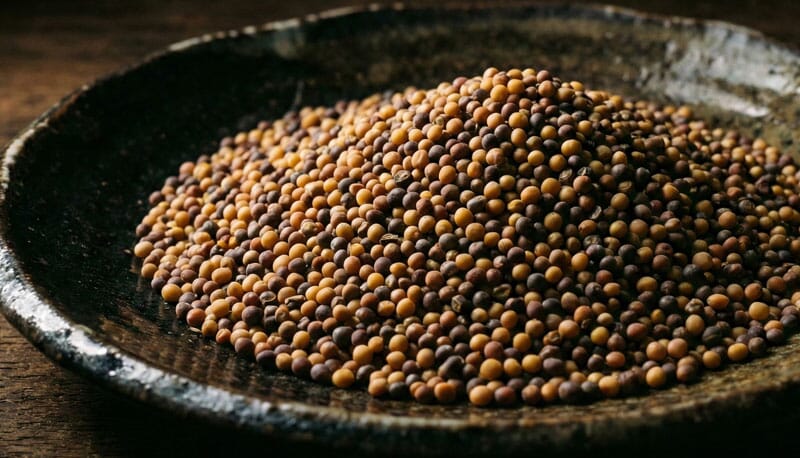
Raw Mustard Seeds

Mustard Cooker

Crude Mustard Oil

Renfining Mustard Oil
THE PROCESS: ENGINEERING FOR PUNGENCY AND PURITY
Unlike other vegetable oils, mustard oil is prized for its strong flavor (pungency) and high smoke point.
A standard processing line must be calibrated to preserve natural enzymes while ensuring maximum extraction.
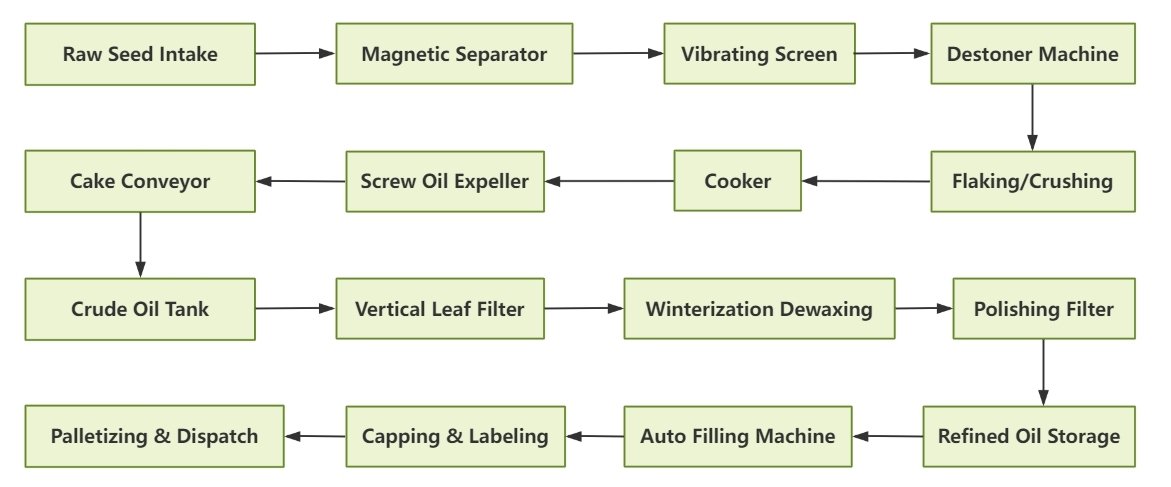
Mustard Oil Processing Plant Flow Chart Diagram
As illustrated in the process flow chart above, a modern Mustard Oil Processing Plant integrates 16 critical stages.
Distinguished investors can decide based on their own needs the Winterization (Row 3, Step 3) phase.
Large Industrial-grade lines ensure this step is included to prevent the oil from clouding during cold winters, a key quality metric for export markets.
Pretreatment & Cleaning (The Foundation) Impurities like dust, stones, and metal particles can ruin high-pressure expellers.
Essential Tech: Oilseed cleaning Machine and Oilseed Destoner Machine.
Pro Tip: Proper cleaning increases the lifespan of your screw press parts by up to 20%.
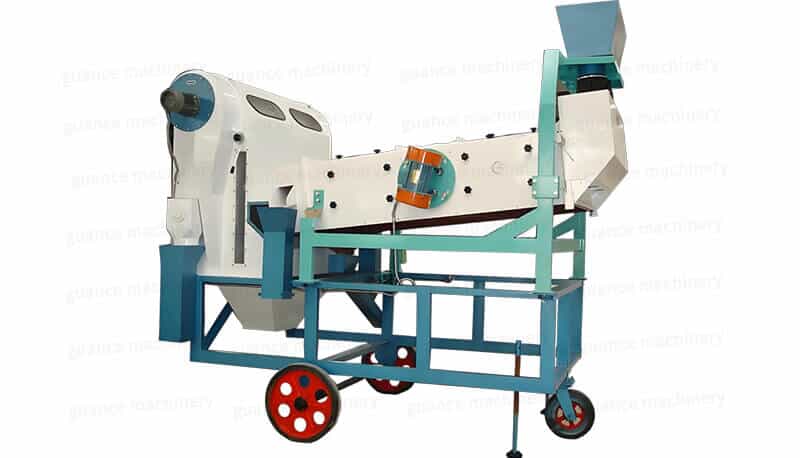
Oilseed cleaning Machine
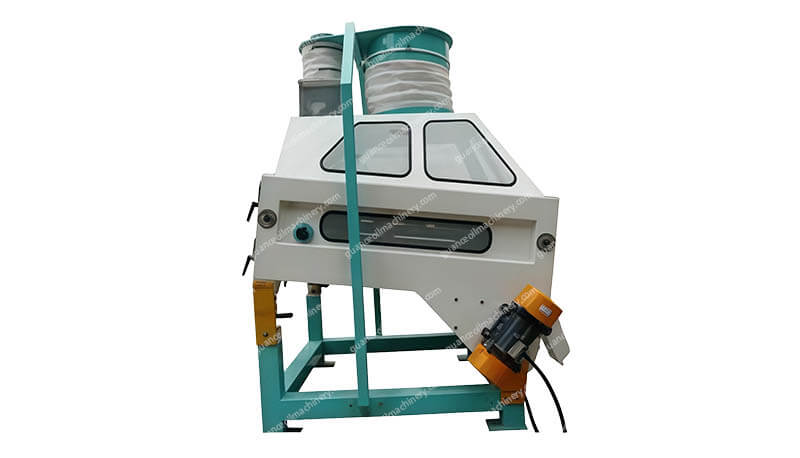
Oilseed Destoner Machine
Conditioning (Cooking vs. Cold Press) This is where the market is won or lost.
For Traditional “Kachhi Ghani”: Low-temperature processing is required to retain Allyl Isothiocyanate (the pungent compound).
For Industrial Output: Vertical Oilseeds Steam Cooker condition the seeds to rupture oil cells, increasing yield in the expeller.
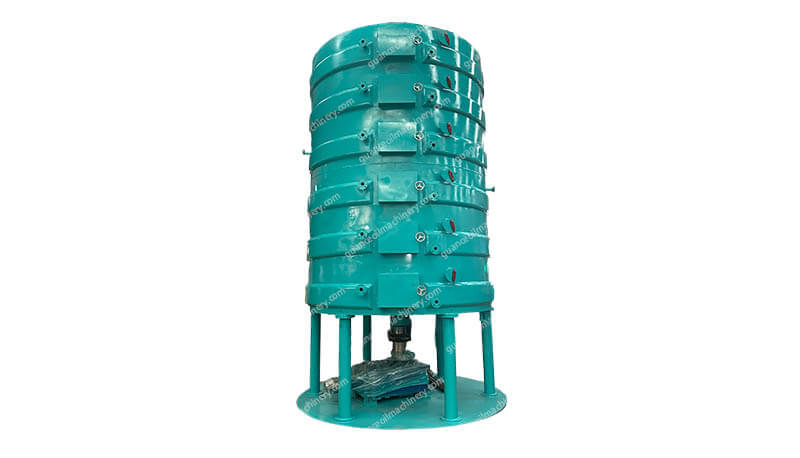
Vertical Oilseeds Steam Cooker
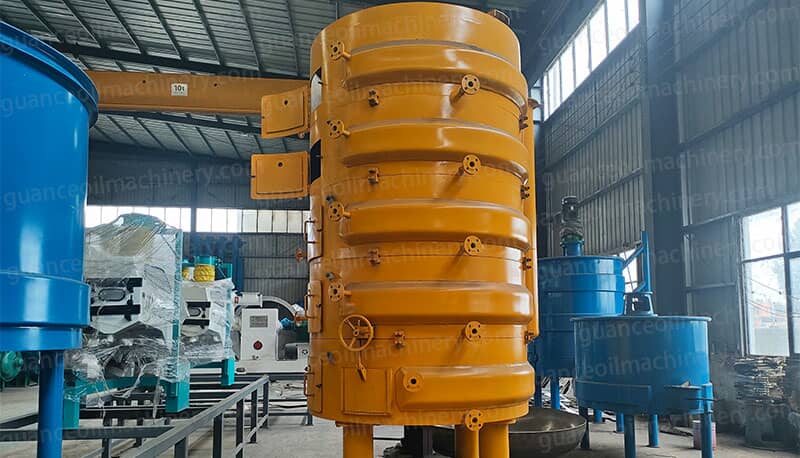
Cooker
Extraction (The Screw Oil Press) The heart of your Mustard Oil Processing Plant.
Technical Spec: Look for multi-stage automatic oil presses. High-quality alloy steel worms are non-negotiable for handling the abrasive nature of mustard husks.
Key Metric: Your residual oil in cake should be below 6-7% for a single press operation.

Screw Oil Machine
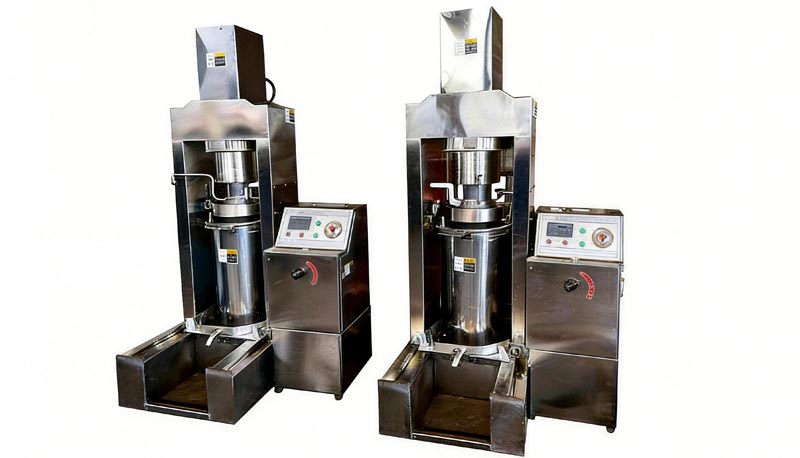
Hydraulic Cold Press Oil Machine
Filtration (Polishing the Product) Crude mustard oil contains “foots” (sediment).
Recommendation: Plate Oil Filter Machine serve traditional needs well, but for larger plants, Pressure Leaf Filter (PLF) reduce labor costs and oil loss.
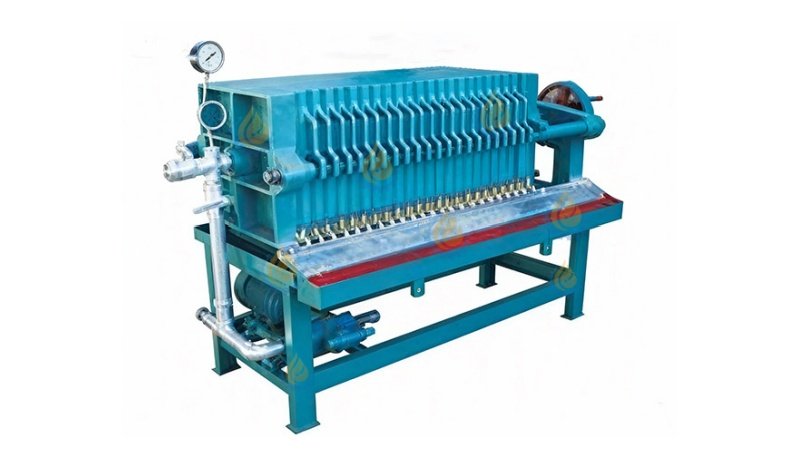
Plate Oil Filter Machine
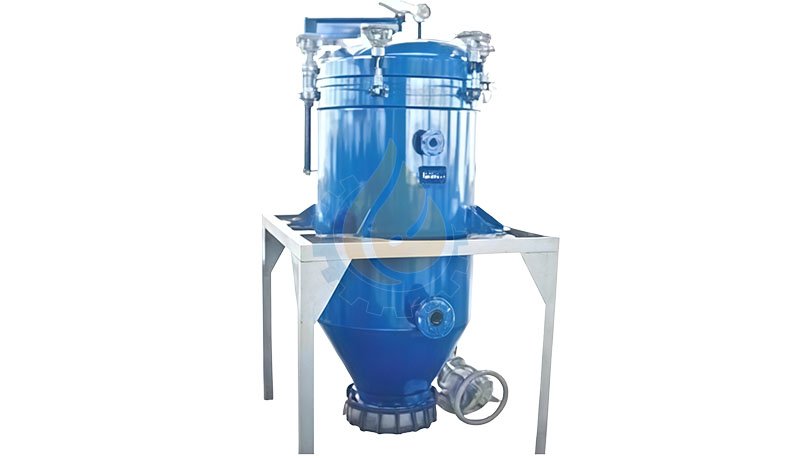
Leaf Filter
ANALYZING THE ECONOMICS: ROI AND YIELD
For a CEO, the machinery is an asset; the output is the revenue.
Oil Content: Mustard seeds generally contain 38-42% oil.
Extraction Efficiency: A modern plant should recover at least 34-36% oil.
Byproduct Revenue: Mustard oil cake (De-oiled cake) is a high-protein animal feed in great demand.
The revenue from the cake often covers the plant’s electricity and labor costs, leaving the oil revenue as pure profit.
Industry Insight: Efficiency isn’t just about speed. It’s about uptime.
Choosing Guance Machinery manufacturer that offers local spare parts support and rugged gearboxes can save you thousands of dollars in “downtime costs” annually.
CHOOSING THE RIGHT SCALE: MINI OIL MILL VS. TURNKEY PLANT
Small Scale (1-10 TPD): Ideal for local markets focusing on fresh, cold-pressed branding. Lower CAPEX, higher margins per liter.
Large Scale (20-100+ TPD): Requires fully automated oil solvent extraction integration to extract that final 5% of oil from the cake. Volume is the key driver here.
Are you ready to calculate the estimated ROI for your specific capacity? Contact Guance Machinery today for a customized proposal.

📩 Get Your Free Quote Today
Contact us today to discuss your project, capacity requirements, and target materials. Our team will reply within 24 hours with a customized proposal. You can also reach us directly at guanceoilmachinery@gmail.com — we are here to help!