Pumpkin Seed Oil Processing Plant Cost
The global demand for pumpkin seed oil continues its steady ascent, driven by its nutritional value and versatile applications in food, cosmetics, and pharmaceuticals.
For entrepreneurs and established businesses looking to enter or expand within this market, understanding the financial investment required for a pumpkin seed oil processing plant is paramount.
As an engineer with two decades of experience at Guance Machinery, I aim to demystify the “Pumpkin Seed Oil Processing Plant Cost” by outlining the critical factors that shape your overall expenditure.
Key Factors Determining Pumpkin Seed Oil Processing Plant Cost
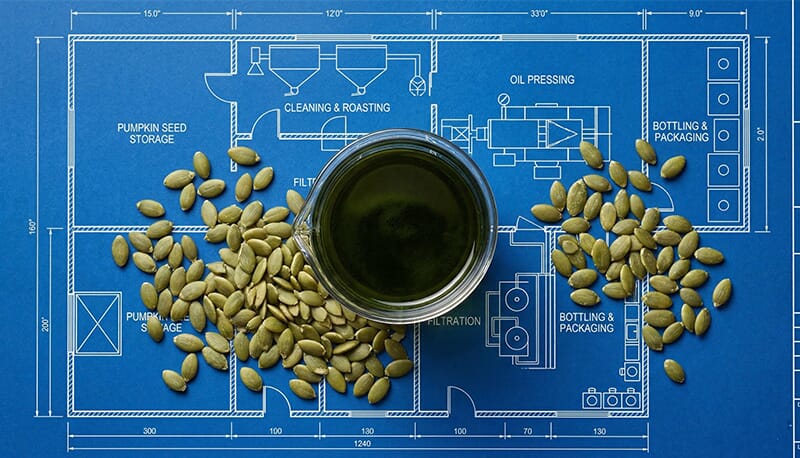
Estimating the cost of a pumpkin seed oil processing plant is not a straightforward task.
It requires a detailed assessment of several interrelated variables, each impacting the initial capital outlay and long-term operational expenses.
1. Processing Capacity and Scale
The most significant determinant of cost is the desired processing capacity, typically measured in tons per day (TPD) or kilograms per hour (kg/h) of raw pumpkin seeds.
A small-scale plant (e.g., 1-20 TPD) designed for local markets or specific niche products will have a substantially lower cost than a medium-scale plant (20-50 TPD) or large-scale plant (50+ TPD) industrial operation.
Larger capacities necessitate bigger, more robust machinery, extensive infrastructure, and often a higher degree of automation, all contributing to increased investment.
2. Chosen Oil Extraction Technology
The core of any oil processing plant is its extraction method.
The choice between mechanical pressing, solvent extraction, or a combination profoundly affects cost, oil yield, and product quality.
- Mechanical Pressing (Cold/Hot Press): This method involves physically pressing oil from seeds. It typically has a lower initial capital cost, simpler operation, and produces a natural, unrefined oil. Guance Machinery is advanced pressing equipment is engineered for efficiency, achieving residual oil rates in the cake as low as 8-10% for cold pressing and 5% for hot pressing, significantly improving overall yield compared to older designs.
- Solvent Extraction: This method uses food-grade solvents to extract nearly all oil, resulting in a residual oil content in the meal typically below 1%. While offering a higher oil yield, it involves greater initial investment due to specialized extraction vessels, desolventizing systems, and solvent recovery units, along with more stringent safety protocols.
- Integrated Solutions (Pre-pressing + Solvent Extraction): For maximum efficiency and profitability on a larger scale, combining pre-pressing (to remove a significant portion of oil mechanically) with subsequent solvent extraction (to recover remaining oil) is a common strategy. This approach optimizes both oil yield and operational costs.
3. Equipment Configuration and Automation Level
Beyond the primary extraction machinery, the overall plant configuration plays a crucial role in cost. This includes:
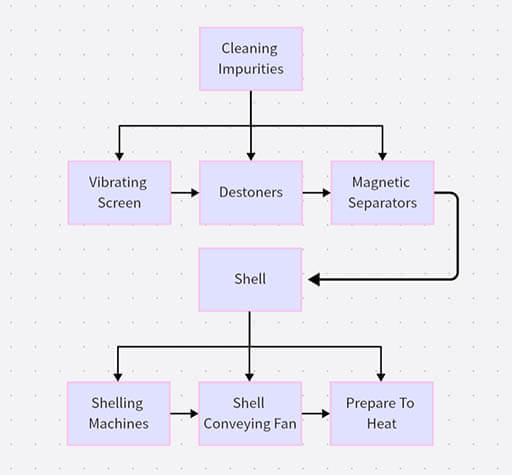
- Pre-treatment Equipment: Cleaning, dehulling, drying, flaking, and cooking equipment are essential for preparing seeds for optimal oil extraction. The inclusion and complexity of these units impact the total cost.
- Refining Section: If the final product requires refined oil (degummed, deacidified, decolorized, deodorized), additional refining equipment is necessary, significantly increasing investment. Crude oil plants are less expensive.
- Automation: The level of automation, from manual operation to semi-automatic or fully integrated PLC-controlled systems, affects equipment sophistication, labor costs, and overall plant efficiency. Higher automation typically means higher upfront equipment costs but lower long-term labor expenses.
- Material Quality: The choice of construction materials (e.g., food-grade stainless steel for parts in contact with oil/food vs. carbon steel for structural components) directly influences durability and cost. Guance Machinery prioritizes robust, high-grade materials for extended operational life.
4. Ancillary Systems and Infrastructure
The total project cost also encompasses elements beyond the core processing machinery:
- Utilities: Power generation and distribution, water supply and treatment, and steam generation systems are critical and can be substantial investments.
- Waste Treatment: Systems for managing wastewater, spent meal, and other by-products are often legally required and add to the project cost.
- Storage Facilities: Silos for raw seeds, tanks for crude and refined oil, and warehouses for packaged products contribute to the overall footprint and expense.
- Installation and Commissioning: The cost of transporting, installing, testing, and commissioning the entire plant, often including specialized engineering services, must be factored in.
Guance Machinery’s Commitment: Maximizing Your ROI
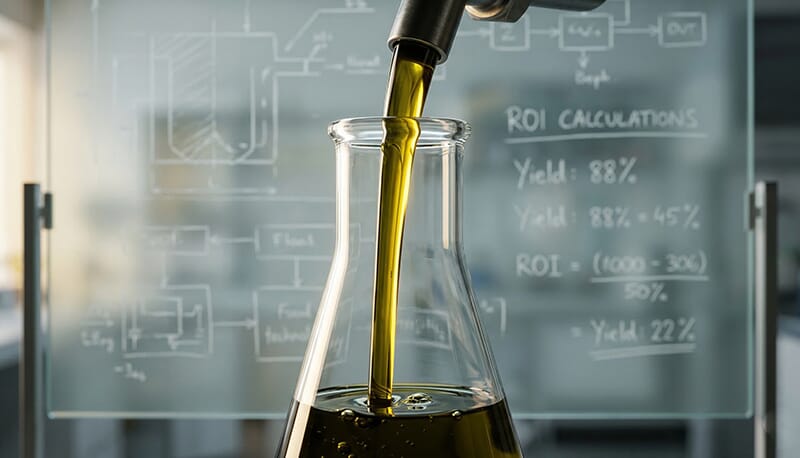
At Guance Machinery, our mission is to provide not just equipment, but comprehensive solutions that deliver tangible value.
We understand that “cost” isn’t merely the purchase price, but the total cost of ownership over the equipment’s lifespan.
Our focus on high oil yield, equipment durability, and exemplary after-sales service is designed to maximize your return on investment.
Superior Oil Yield for Higher Profitability
Our engineering philosophy centers on minimizing oil loss at every stage of processing.
Through precision design, optimized pressing chambers, and efficient solvent recovery systems, Guance equipment consistently achieves superior oil extraction rates.
For instance, our advanced cold presses are designed to achieve oil yields of 30-35% from quality pumpkin seeds, with residual oil in the press cake reliably kept at 5%.
For solvent extraction systems, we guarantee residual oil in the meal to be consistently below 1%.
This difference in yield directly translates into higher output and increased profitability for your operation.
Robust and Durable Equipment for Long-Term Value
The longevity and reliability of your processing plant directly impact your operational costs and production stability.
Guance Machinery utilizes high-quality, industry-standard materials, such as food-grade SUS304 or SUS316 stainless steel for all parts in contact with edible oil, and heavy-duty alloy steels for critical pressing components.
Our equipment is engineered for continuous, demanding operation, minimizing downtime and maintenance requirements.
Requesting a Customized Quote from Guance Machinery

Our experienced engineering team will conduct a thorough consultation to understand your unique requirements and design a cost-effective, high-performance solution that aligns with your business objectives.
Reach out to Guance Machinery today for a detailed discussion and a personalized proposal.
📩 Get Your Free Quote Today
Contact us today to discuss your project, capacity requirements, and target materials. Our team will reply within 24 hours with a customized proposal. You can also reach us directly at guanceoilmachinery@gmail.com — we are here to help!