Soybean oil producers use two primary methods to extract oil from soybeans: mechanical pressing and solvent extraction. While many small and medium-sized plants rely on screw presses, most large commercial facilities choose solvent extraction as their main production method. Today, solvent extraction has become the industry standard for high-capacity soybean processing plants around the world.
The reason is simple. Large processors aim to maximize oil recovery, increase production efficiency, and reduce operating costs. Consequently, they often select technologies that deliver the highest economic return over the long term. Solvent extraction meets these requirements more effectively than mechanical pressing when production capacity reaches a commercial scale.
Understanding the Solvent Extraction Process
Before extraction begins, soybeans pass through several preparation stages, including cleaning, cracking, conditioning, and flaking. These steps create thin flakes that allow solvent to penetrate the material efficiently.
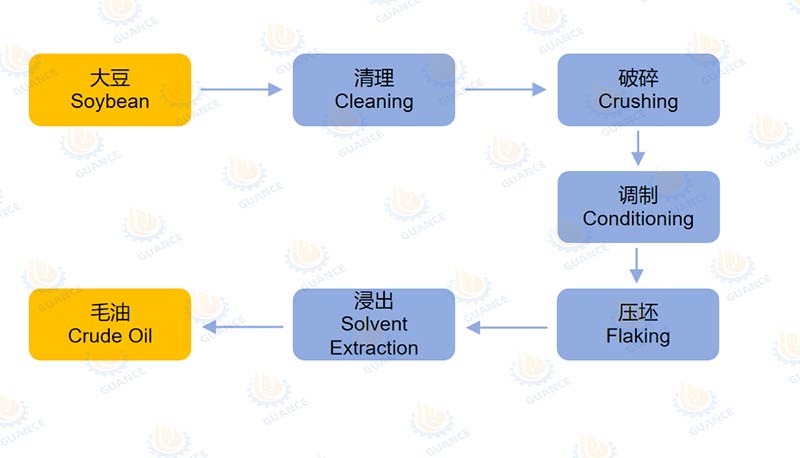 Soybean-extraction-process
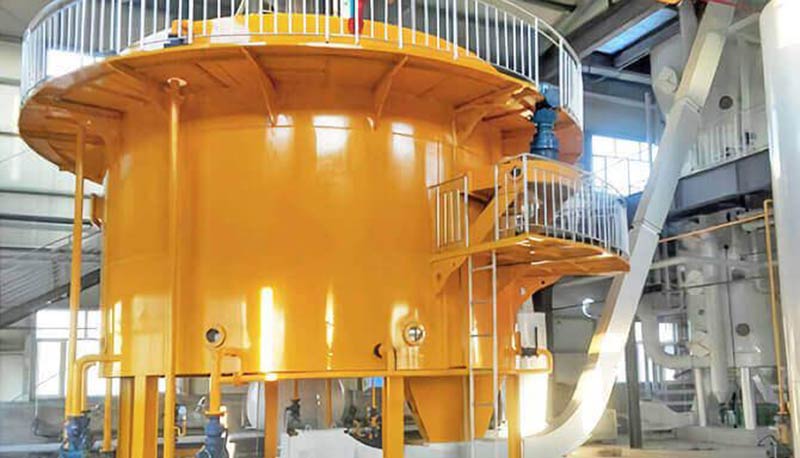
Next, the prepared flakes enter the extractor. Inside the extractor, a food-grade solvent, typically hexane, comes into contact with the soybean flakes. The solvent dissolves the oil and forms a liquid mixture known as miscella.
Meanwhile, the extracted soybean meal leaves the extractor and enters the desolventizing system, where residual solvent is removed and recovered. At the same time, the miscella flows through evaporation and stripping systems that separate the oil from the solvent. As a result, processors obtain crude soybean oil and recover most of the solvent for reuse.
Because the solvent circulates continuously within the system, the process achieves high extraction efficiency while maintaining economical operating costs.
Higher Oil Recovery
One of the biggest advantages of solvent extraction is its ability to recover more oil from soybeans.
Mechanical pressing removes a large portion of the oil; however, a considerable amount of oil remains trapped inside the press cake. In contrast, solvent extraction dissolves and removes oil much more effectively.
As a result, the residual oil content in extracted soybean meal is usually very low. Consequently, processors can recover more marketable oil from the same quantity of soybeans.
For a small plant, the difference in oil recovery may appear modest. However, for a facility processing hundreds or thousands of tons of soybeans per day, even a small increase in recovery can generate substantial additional revenue. Therefore, maximizing oil yield becomes a major priority for large-scale investors.
Better Economics for Large Production Volumes
Investment decisions often depend on long-term profitability rather than initial equipment cost alone.
Although a solvent extraction plant requires a higher initial investment than a simple pressing line, the economic benefits become increasingly attractive as production capacity grows.
For example, a plant processing 1,000 tons of soybeans per day can recover significantly more oil through solvent extraction than through pressing alone. Consequently, the additional oil sales can offset the higher capital investment over time.
Furthermore, higher extraction efficiency reduces raw material waste. Since soybeans represent the largest operating cost in most oil mills, improving oil recovery directly improves overall profitability.
Therefore, many investors evaluate extraction technology based on lifetime returns rather than initial expenditure.
Ideal for Large Processing Capacities
Another important reason large plants choose solvent extraction is capacity.
Modern extraction systems can process hundreds or even thousands of tons of soybeans every day. In many cases, extraction plants operate continuously for extended periods with stable performance.
Moreover, large extractors provide consistent processing conditions and support automated operation. Consequently, operators can manage production more efficiently while maintaining product quality.
Today, many commercial soybean facilities process 500 TPD, 1,000 TPD, 3,000 TPD, or even more. Under these conditions, solvent extraction offers clear advantages over traditional pressing systems.
Improved Soybean Meal Quality
Large soybean processors do not only sell oil. In fact, soybean meal often represents a significant portion of plant revenue.
Therefore, maintaining meal quality is extremely important.
After extraction, the soybean meal enters a desolventizer-toaster-dryer-cooler (DTDC) system. This equipment removes solvent while preserving the nutritional value of the meal.
As a result, processors can produce high-quality soybean meal suitable for animal feed applications. Furthermore, the low residual oil content increases the protein concentration of the meal, which often improves its market value.
Consequently, solvent extraction supports both oil production and meal profitability.
Enhanced Automation and Operational Efficiency
Modern solvent extraction plants incorporate advanced automation systems. Operators can monitor temperatures, flow rates, solvent circulation, and production parameters in real time.
Moreover, automated controls help maintain stable operating conditions and reduce human error.
As a result, large facilities achieve consistent product quality and improved production reliability. In addition, automation can lower labor requirements and simplify plant management.
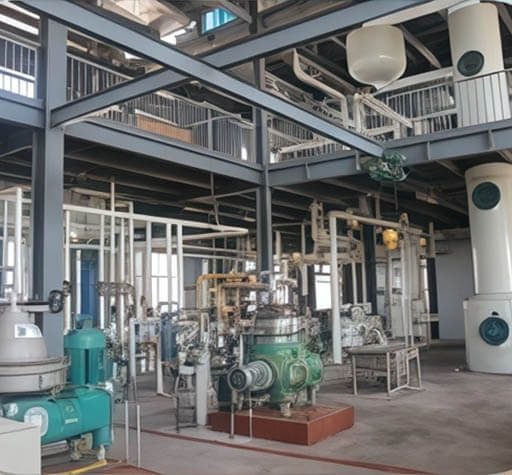
 solvent-extractor
Therefore, solvent extraction aligns well with the needs of industrial-scale soybean processing operations.
Why Direct Extraction Works Well for Soybeans
Soybeans typically contain between 18% and 22% oil, which is lower than many other oilseeds such as sunflower seed, rapeseed, and peanut.
Because of this relatively low oil content, large soybean plants often use direct solvent extraction instead of pre-pressing followed by extraction.
Direct extraction simplifies the process flow and eliminates the need for additional pressing equipment. Furthermore, it reduces energy consumption associated with mechanical pressing.
Consequently, direct extraction has become the preferred solution for many high-capacity soybean processing facilities worldwide.
Conclusion
As soybean processing operations continue to expand, producers increasingly focus on maximizing efficiency and profitability. Solvent extraction offers higher oil recovery, greater processing capacity, improved meal quality, and better long-term economic performance.
Although mechanical pressing remains a practical solution for smaller operations, large soybean processing plants often require a technology that can deliver maximum value from every ton of raw material. Therefore, solvent extraction has become the preferred choice for many commercial soybean oil producers around the world.
📩 Get Your Free Quote Today
Contact us today to discuss your project, capacity requirements, and target materials. Our team will reply within 24 hours with a customized proposal. You can also reach us directly at guanceoilmachinery@gmail.com — we are here to help!