In a modern soybean solvent extraction plant, the extraction process does not end when oil is removed from soybean flakes. After leaving the extractor, the extracted soybean meal still contains a certain amount of solvent. Therefore, an efficient solvent removal system is essential to recover solvent, improve meal quality, and ensure safe operation.
The DTDC (Desolventizer-Toaster-Dryer-Cooler) is one of the most important pieces of equipment in soybean extraction plants. It performs several functions in one integrated system, including solvent removal, meal cooking, drying, and cooling. Consequently, DTDC equipment plays a critical role in both solvent recovery and soybean meal production.
What Is a DTDC System?
A DTDC is a vertical multi-layer processing unit designed for treating extracted soybean meal after solvent extraction. The name DTDC represents four major processing stages: 1) Desolventizing 2) Toasting 3) Drying 4)Cooling. Each section performs a different function. However, these stages work together as one continuous process to produce high-quality soybean meal with low residual solvent content.
After soybean flakes pass through the rotary extractor, the extracted meal enters the DTDC system. At this stage, the meal contains solvent, mainly hexane, which must be removed before the meal can be used as animal feed. Therefore, the first function of the DTDC is solvent removal.
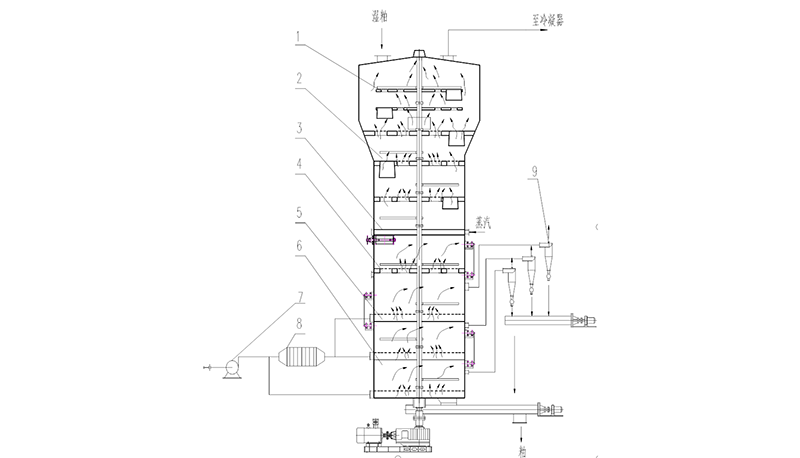 DTDC Structure
Desolventizing Stage: Removing Residual Solvent
The desolventizing section is the first and most important stage inside the DTDC.
When extracted soybean meal enters the upper layers of the equipment, indirect heating and live steam are introduced. As a result, the temperature of the meal increases, causing the solvent to evaporate.
Meanwhile, the generated solvent vapor moves upward and is collected by the solvent recovery system. Consequently, most of the solvent can be recovered and reused in the extraction process.
Efficient desolventizing provides two major benefits.
First, it reduces solvent loss and lowers operating costs.
Second, it ensures that the final soybean meal meets safety requirements for animal feed applications.
Therefore, the desolventizing section directly influences both plant economics and product quality.
Toasting Stage: Improving Soybean Meal Quality
After solvent removal, the soybean meal enters the toaster section.
During this stage, steam heating continues to treat the meal. The main purpose of toasting is to deactivate anti-nutritional factors, especially trypsin inhibitors, which naturally exist in raw soybeans.
If these compounds remain at high levels, they may reduce the nutritional value of soybean meal for animals. Therefore, proper toasting is necessary to produce high-quality feed ingredients.
Furthermore, the toasting process improves the digestibility of soybean protein. As a result, properly processed soybean meal becomes a valuable product for the animal feed industry.
Temperature control and residence time are extremely important during this stage. Excessive heating may damage protein quality, while insufficient heating may leave undesirable compounds in the meal.
Consequently, modern DTDC systems are designed to maintain stable processing conditions.
Drying Stage: Controlling Meal Moisture
After toasting, the soybean meal moves downward into the drying section.
At this point, the meal contains higher moisture because of steam injection during previous stages. Therefore, controlled drying is required to achieve suitable moisture content before storage or transportation.
During drying, hot air or heated gas removes excess moisture from the meal.
As a result, the final soybean meal reaches a stable condition with better storage performance.
Moreover, efficient drying reduces the risk of mold growth and improves product shelf life.
Cooling Stage: Preparing Meal for Storage
The final section of the DTDC is the cooling stage.
Before storage, soybean meal temperature must be reduced. Otherwise, hot meal may create condensation problems inside storage facilities.
Therefore, cooling air is introduced to lower the temperature of the finished meal.
Consequently, the soybean meal becomes suitable for transportation, packaging, or further use in feed production.
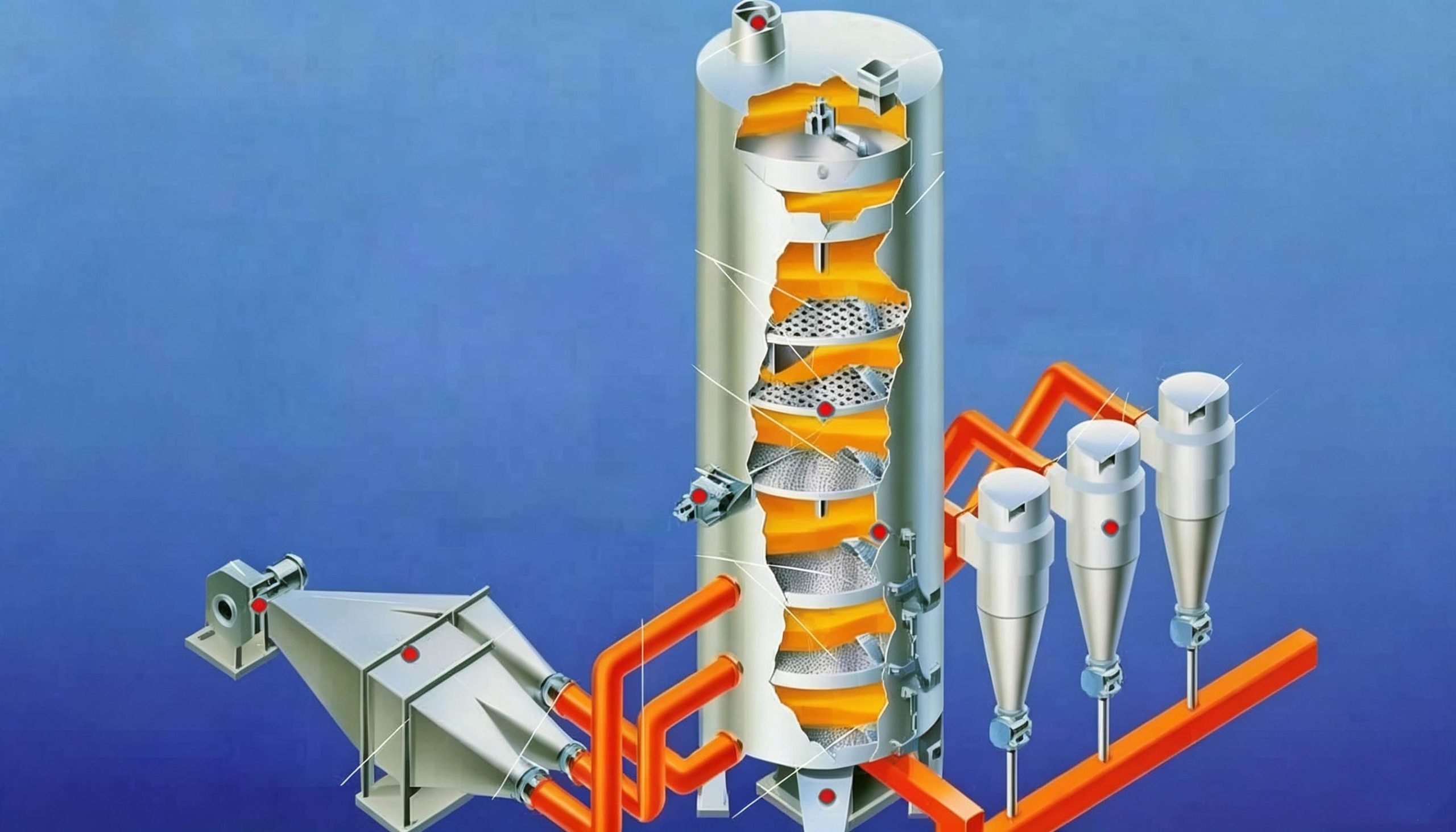 DTDC
Advantages of DTDC in Soybean Extraction Plants
The DTDC provides several important advantages for modern soybean processing facilities.
1. High Solvent Recovery Efficiency
Because solvent is recovered directly during processing, the DTDC reduces solvent consumption and improves plant economics.
Furthermore, efficient solvent recovery also improves environmental performance by minimizing solvent emissions.
2. Improved Soybean Meal Quality
The toasting process enhances protein digestibility and reduces anti-nutritional factors.
As a result, the produced soybean meal achieves higher market value.
3. Integrated Processing Design
Instead of using separate machines for solvent removal, heating, drying, and cooling, the DTDC combines multiple operations into one unit.
Consequently, it saves space and simplifies plant layout.
4. Stable Continuous Operation
Large soybean extraction plants usually operate continuously for long periods.
Therefore, reliable equipment is essential.
Modern DTDC systems provide stable operation and can be integrated with automatic control systems for better production management.
DTDC and Energy Efficiency
Energy consumption is an important consideration in large soybean processing plants.
The DTDC system is designed to recover and reuse energy whenever possible.
For example, solvent vapor generated during desolventizing can be recovered through the solvent recovery system. Moreover, heat integration between different sections can reduce overall steam consumption.
As a result, the plant can achieve lower operating costs while maintaining high production efficiency.
The Role of DTDC in Complete Soybean Extraction Lines
A soybean extraction plant is a complete system consisting of several connected sections:
Soybean Preparation → Flaking → Solvent Extraction → DTDC → Solvent Recovery → Crude Oil Processing
Among these sections, the extractor removes oil from soybean flakes, while the DTDC ensures that the extracted meal becomes a valuable final product. Therefore, both the rotary extractor and DTDC are essential for achieving efficient soybean oil production.
Conclusion
The DTDC Desolventizer-Toaster-Dryer-Cooler is a key component in modern soybean solvent extraction plants. By combining solvent removal, toasting, drying, and cooling functions, it improves solvent recovery, enhances soybean meal quality, and supports efficient plant operation.
For large-scale soybean processing projects, selecting a reliable DTDC system is essential for achieving stable production and long-term profitability.
After oil extraction and meal processing are completed, the next important stage is crude soybean oil refining. The refining process removes impurities and improves oil quality, making it suitable for edible applications.
📩 Get Your Free Quote Today
Contact us today to discuss your project, capacity requirements, and target materials. Our team will reply within 24 hours with a customized proposal. You can also reach us directly at guanceoilmachinery@gmail.com — we are here to help!