Introduction
Peanuts are an important oilseed used for producing edible peanut oil and high-protein peanut cake. Before oil extraction, proper pretreatment is essential because it affects oil yield, pressing efficiency, and the quality of both crude oil and cake.
Depending on the raw material, production requirements and extraction method, peanuts can be processed after shelling or with the shells, also prepressing or not. Therefore, the selection of pretreatment process is according to the peanut variety, raw material condition, equipment capacity, extraction method and final product requirements.
Cleaning the Peanuts
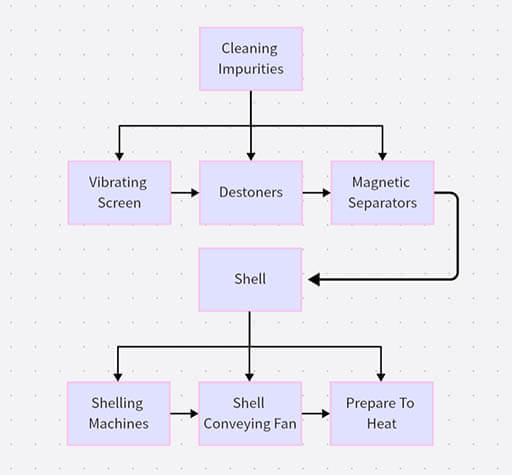
The first step is cleaning. Raw peanuts may contain stones, soil, dust, metal particles, and other foreign materials. These impurities can damage processing equipment and reduce product quality.
A peanut cleaning machine or vibrating screen can remove most large and small impurities. A magnetic separator can also be installed to remove ferrous particles before further processing.
Effective cleaning protects downstream equipment and provides a cleaner raw material for oil extraction.
Should Peanuts Be Dehulled Before Oil Extraction?
Whether peanuts should be dehulled depends on the production process.
Peanut kernels are commonly preferred for oil extraction because the kernels contain most of the oil. Peanut shells themselves do not contain oil, they are mostly coarse fiber with a porous structure. Pressing with the shells on will reduce the oil yield and affect the quality of the oil and cake, as well as increase equipment wear and tear. Removing the shells reduces the amount of non-oil material entering the oil press. It can also improve pressing efficiency and make it easier to control the conditioning process.
However, peanuts with shells can also be processed in some systems. In this case, the equipment configuration must consider the shell content and the required separation of shells from kernels. Shells occupy processing capacity and can also affect the quality and composition of the final peanut cake.
For this reason, commercial peanut oil plants usually evaluate the shelling ratio and the intended use of the by-products before selecting the process.
Crushing
After dehulling, peanut kernels may be crushed or broken into smaller pieces. This increases the surface area and helps release oil during pressing.
For larger processing lines, further size reduction or flaking may be used. Proper particle size is important because excessively fine material can make pressing difficult, while overly large pieces may reduce oil extraction efficiency.
Cooking or Conditioning
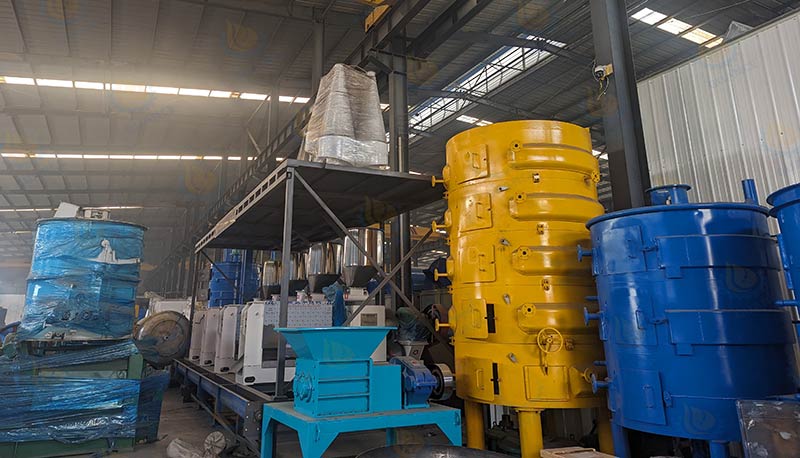
Before pressing, peanuts may undergo heating and moisture adjustment. This step is often called cooking or conditioning.
Proper conditioning softens the cells of the peanut material and helps the oil flow more easily during pressing. It can also improve the stability of the pressing process.
The appropriate temperature and moisture level depend on the peanut variety, oil content, pressing equipment, and desired oil quality. Therefore, operating conditions should be determined according to actual raw material tests rather than using one fixed setting for every project.
 Cooking-Conditioning
Pre-pressing
If a solvent extraction process is subsequently used, then generally employing a pre-pressing before this process. The purpose of pre-pressing is to extract some oil from the production line, creating the optimal material state for subsequent solvent extraction.
 Pre Press Machine
Conclusion
Peanut oil pretreatment should be designed according to the raw material form and the selected extraction method. Although peanut kernels are widely used for efficient oil extraction, peanuts with shells can also be considered when the process and equipment are properly designed.
For screw pressing, pretreatment mainly prepares the peanuts for efficient mechanical oil release. For solvent extraction, proper pre-pressing is especially important for effective solvent penetration.
The right pretreatment process provides a strong foundation for the next stages of peanut oil production, including screw pressing, solvent extraction, refining, and dewaxing.
For more detailed information, please feel free to contact Guance Machinery, we will specify the most suitable solutions based on your raw materials and requirements.
📩 Get Your Free Quote Today
Contact us today to discuss your project, capacity requirements, and target materials. Our team will reply within 24 hours with a customized proposal. You can also reach us directly at guanceoilmachinery@gmail.com — we are here to help!