A 1–20 TPD batch-type sunflower oil refinery plant offers small and startup edible-oil producers a practical way to refine crude sunflower seed oil into clean, food-grade sunflower oil.
This scale (1–20 tons per day) balances low capital investment, manageable footprint, and full refining capacity.
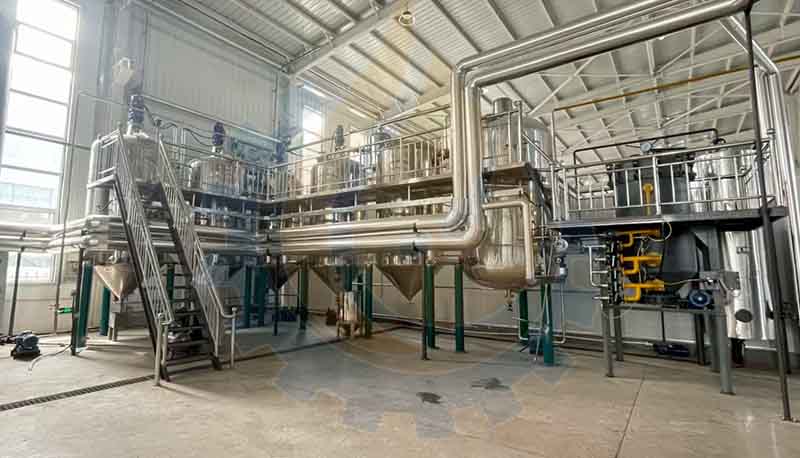
What is a Batch-Type Sunflower Oil Refinery (1–20 TPD)
Batch-type refining means processing crude oil in discrete lots (batches) rather than a continuous flow.
Degumming: removing phospholipids/gums to prevent oil instability.
Deacidification: free fatty acids (FFA) are neutralized with alkali (e.g. NaOH) to form soapstock, which is separated out.
Decolorization: oil is dried under vacuum, then bleaching earth (clay) is added to adsorb pigments, trace metals, peroxides, residual phospholipids, etc.
Deodorization: under high temperature and high vacuum with steam, volatile odor substances are stripped, yielding neutral-smelling, stable oil.
Winterization dewaxing (often for sunflower oil): sunflower oil requires dewaxing to prevent cloudiness at low temperatures and ensure clear, stable, retail-grade appearance.
The result is edible-grade sunflower oil with acceptable color, odor, free fatty acid content, and stable shelf life.
Why Small-Scale Refiners Choose 1–20 TPD Batch Plants
Lower initial investment: Compared with Semi-Continuous Oil Refinery Plant, batch refineries require less capital, fewer auxiliary systems, and simpler utilities.
Flexibility and scalability: Batch plants allow refiners to process varying volumes — helpful when supply of crude sunflower oil fluctuates.
Different oils (sunflower, soybean, peanut, etc.) can often be processed using the same equipment, giving operational flexibility.
Small footprint & simpler operation: Equipment layout is compact; operation and maintenance are simpler compared to large continuous refineries.
Sufficiency for small to mid demand markets: For producers aiming to supply local or niche markets (specialty, small supermarkets, artisan oil, etc.), a daily yield of up to 20 tons is usually more than sufficient.
Key Process Parameters & Typical Equipment Configuration
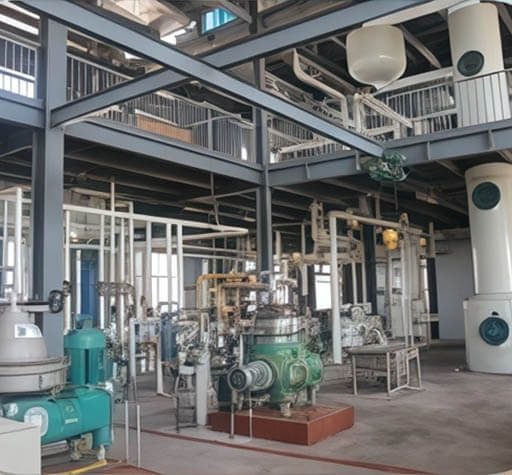
A typical small batch-type sunflower oil refinery plant would include:
Neutralization/refining tank(s) (for degumming + deacidification).
Bleaching (decolorization) tank with vacuum dehydration + bleaching earth dosing.
Deodorization tank with vacuum + steam distillation.
Auxiliary systems: heat conduction heater (or heat-transfer furnace), steam generator, vacuum pump, air compressor (for drying bleaching clay), filters (plate/leaf), pumps, control panel, etc.
How This Relates to Guance Machinery’s Offering
By offering a batch refinery solution, Guance Machinery enables clients to:
Begin production without heavy capital burden.
Flexibly handle varying raw-material inputs (sunflower seed oil, other seed oils).
Achieve edible-oil quality suitable for retail/supermarket standards (after optional dewaxing, bleaching, deodorization).
Expand later: batch-type can serve as initial stage, scaling up to semi-continuous or continuous solutions as demand grows.
If your want, Guance Machinery 1–20 TPD batch-type sunflower oil refinery plant is a realistic, economical entry point.
Contact us now for a free quote.
📩 Get Your Free Quote Today
Contact us today to discuss your project, capacity requirements, and target materials. Our team will reply within 24 hours with a customized proposal. You can also reach us directly at guanceoilmachinery@gmail.com — we are here to help!