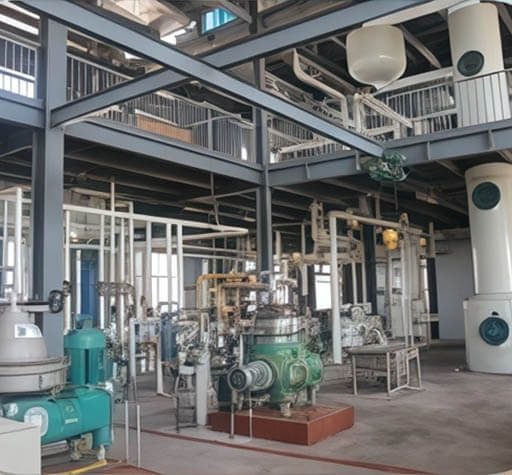
Guance Machinery is Small Scale Edible Oil Refinery Plant setups (batch 1–20 TPD) remain the pragmatic choice for startups.
Small Scale Edible Oil Refinery Plant let operators process different crude oils in separate runs (sunflower, soybean, palm, animal tallow) and tune degumming, neutralization and bleaching recipes per oil type.
Why searchers look for “Small Scale Edible Oil Refinery Plant”
Most buyers want answers to three practical questions
1. What process steps are required for food-grade oil?
2. What are realistic yields/costs?
3. Which equipment footprint fits their budget?
The common industrial steps — degumming, neutralization (deacidification), bleaching (vacuum clay treatment), deodorization and optional dewaxing/winterization — are necessary to meet shelf-life, color and food-safety targets.
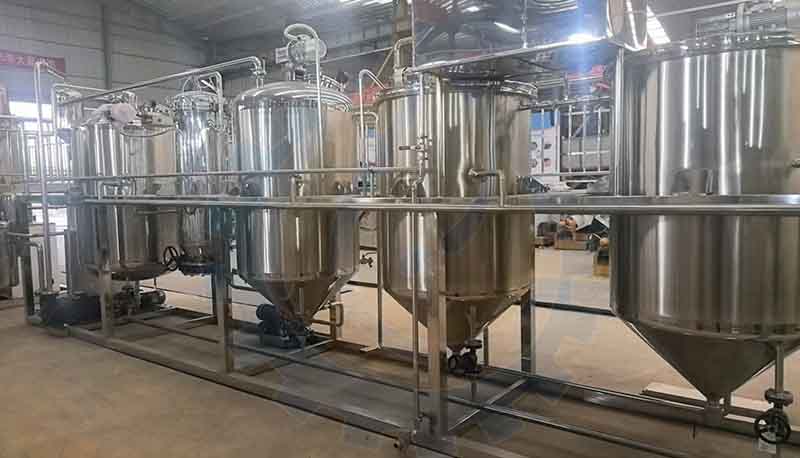
Process summary
1. Degumming: hydrate or acid-degumming to remove phospholipids and colloids; commonly followed by centrifugation.
2. Neutralization (deacidification): alkali or physical methods to lower FFA; controls yield vs. FFA removal strategy.
3. Bleaching: heating under vacuum and contacting with bleaching earth / activated carbon to remove pigments and trace metals.
4. Deodorization: high-temperature steam stripping under deep vacuum to remove volatiles and off-odors.
5. Winterization Dewaxing Plant: cooling and filtration to remove waxes for clear oil at low temperatures.
Key buyer-focused specs
| Model | Capacity (TPD) | Typical Steam (kg/hr) | Vacuum (mbar abs) | Expected Yield (%) | Footprint (m²) |
|---|---|---|---|---|---|
| SM-1T | 1 | 25 | 5–20 | 92–96 | ~12 |
| SM-2T | 2 | 40 | 5–20 | 92–97 | ~18 |
| SM-5T | 5 | 90 | 3–15 | 93–98 | ~35 |
| Notes: actual steam and vacuum depend on crude FFA, bleaching dosage and deodorization steam rate; yields fall with higher initial FFA and heavier winterization. Source plant examples and engineering data inform these ranges. | |||||
Practical operational tips
Target pre-degumming phospholipids ≤200 ppm to reduce bleaching earth consumption and filtration load.
Use staged bleaching (smaller clay dose + shorter contact) to lower oil loss versus one heavy dose.
Monitor vacuum during deodorization: deeper vacuum reduces deodorization temperature and preserves nutrients but requires reliable pumps and condensers.
Keep spare bleaching earth and filter media inventory sized to 7–10 production days to avoid downtime. (Guance Machinery trial data).
Contact us now for a free quote.
📩 Get Your Free Quote Today
Contact us today to discuss your project, capacity requirements, and target materials. Our team will reply within 24 hours with a customized proposal. You can also reach us directly at guanceoilmachinery@gmail.com — we are here to help!