The rotary extractor is one of the most important pieces of equipment in a modern soybean solvent extraction plant. It performs the core task of separating oil from prepared soybean flakes through continuous solvent extraction. Because it combines high efficiency, stable operation, and large processing capacity, the rotary extractor has become the preferred extraction equipment for many commercial soybean oil plants around the world.
Unlike mechanical pressing, which relies on physical pressure to release oil, a rotary extractor uses solvent to dissolve the oil from soybean flakes. Consequently, processors can recover more oil from every ton of soybeans while maintaining continuous production.
What Is a Rotary Extractor
A rotary extractor, also known as a Rotocel extractor, is a continuous extraction machine widely used in large edible oil processing plants. The extractor consists of a rotating circular vessel that contains multiple material cells. Each cell holds a layer of prepared soybean flakes during the extraction process.
As the extractor rotates slowly, every material cell moves through different processing zones. Meanwhile, fresh solvent and miscella flow through the flakes in a carefully controlled sequence. As a result, the oil gradually dissolves into the solvent until extraction is complete.
This continuous operation allows the extractor to process large quantities of soybeans while maintaining consistent extraction performance.
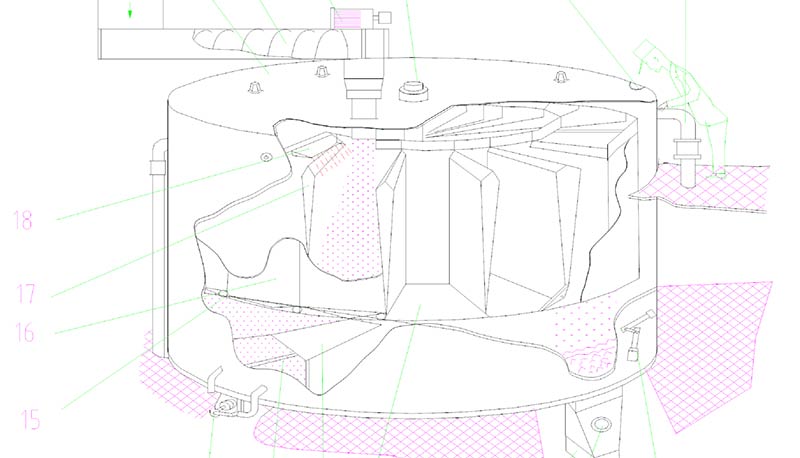 Rorary-Extraction-Inner
How the Rotary Extractor Works
Before entering the extractor, soybeans pass through cleaning, cracking, dehulling, conditioning, and flaking. These pretreatment steps produce thin and uniform flakes that improve solvent penetration.
Next, the flakes enter the rotary extractor through the feeding system. The distributor spreads the material evenly into each extraction cell. Consequently, every cell receives a uniform material layer, which helps maintain stable extraction conditions.
As the extractor rotates, the flakes travel slowly through several extraction stages.
Fresh solvent enters the extractor near the final extraction zone. Meanwhile, concentrated miscella contacts the freshly fed soybean flakes at the beginning of the process. This arrangement creates a counter-current extraction system.
Because the solvent with the lowest oil concentration contacts the flakes with the lowest remaining oil content, extraction remains highly efficient throughout the process. At the same time, the richer miscella contacts fresh flakes with a higher oil concentration. Consequently, the concentration difference between solvent and oil remains favorable during every stage of extraction.
As a result, the extractor achieves excellent oil recovery while minimizing solvent consumption.
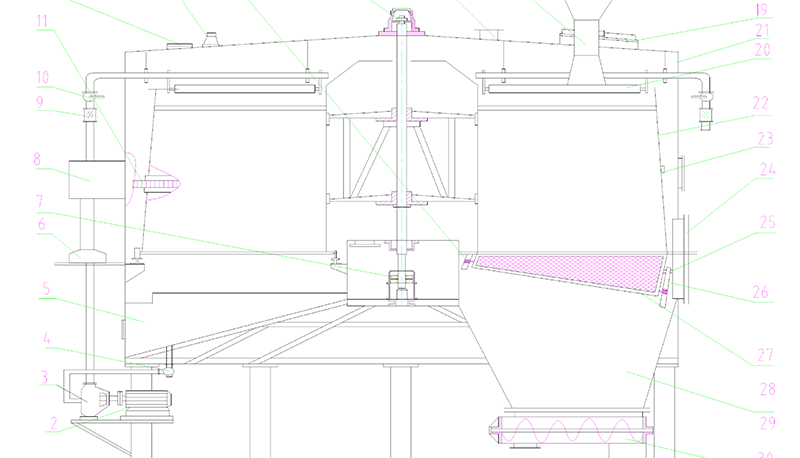 Rotary-Extraction-Elevation
Counter-Current Extraction Improves Efficiency
One of the biggest advantages of a rotary extractor is its counter-current extraction principle.
Instead of using fresh solvent at every stage, the system gradually transfers miscella from one extraction zone to another. Consequently, the concentration gradient remains high throughout the process.
This design provides several important benefits.
First, it improves oil recovery because solvent continuously contacts material with a higher remaining oil concentration.
Second, it reduces solvent consumption by making full use of every circulation cycle.
Moreover, it decreases residual oil in the extracted meal.
Finally, it supports stable operation even when processing large production volumes.
For these reasons, counter-current extraction has become the industry standard in modern soybean extraction plants.
Main Components of a Rotary Extractor
A rotary extractor contains several major components that work together to achieve continuous extraction.
Feeding System
The feeding system transfers prepared soybean flakes into the extractor and distributes the material evenly among all extraction cells. Uniform feeding helps maintain stable extraction efficiency and prevents uneven solvent flow.
Rotary Extraction Cells
The extraction cells carry the soybean flakes through each extraction stage. Because the cells rotate slowly with the extractor, every batch of material experiences the same extraction time and operating conditions.
Solvent Spray System
The spray system distributes fresh solvent and miscella over the soybean flakes. Moreover, multiple spray stages allow the extractor to perform efficient counter-current extraction.
Miscella Collection System
As solvent dissolves the oil, the resulting miscella drains through the perforated bottom of each extraction cell. The collection system then transfers miscella to evaporation equipment for oil and solvent separation.
Drive System
A stable drive system rotates the extractor at a carefully controlled speed. Consequently, residence time remains consistent, which contributes to reliable extraction performance.
Advantages of Rotary Extractors
Rotary extractors offer several advantages over other extraction technologies.
First, they provide continuous operation, making them suitable for large commercial production.
Second, the counter-current extraction principle maximizes oil recovery while reducing solvent consumption.
Third, the simple rotary structure offers reliable performance and relatively low maintenance requirements.
Furthermore, the extractor can process large production capacities while maintaining stable operating conditions.
In addition, automation systems allow operators to monitor material flow, solvent circulation, and extraction parameters in real time.
Consequently, processors can achieve consistent product quality and higher production efficiency.
Applications in Soybean Oil Plants
Rotary extractors are widely used in medium and large soybean oil processing plants.
Depending on plant design, they can handle production capacities ranging from several hundred tons to several thousand tons per day.
Moreover, rotary extractors integrate easily with downstream equipment such as DTDC systems, miscella evaporation units, solvent recovery systems, and crude oil storage tanks.
Because every processing section operates continuously, the entire extraction plant achieves high productivity and stable performance.
Choosing the Right Rotary Extractor
Selecting the proper extractor depends on several project requirements.
Processors should consider production capacity, raw material characteristics, automation level, solvent recovery efficiency, and future expansion plans.
Furthermore, equipment quality, manufacturing precision, and engineering support all influence long-term plant performance.
Therefore, working with an experienced equipment supplier can help investors design an efficient and reliable extraction system that matches their production goals.
Conclusion
The rotary extractor plays a central role in modern soybean solvent extraction plants. Its continuous operation, counter-current extraction principle, and efficient solvent utilization allow processors to achieve high oil recovery while maintaining stable production.
As soybean processing facilities continue to increase in size, rotary extractors remain the preferred solution for commercial oil extraction projects around the world.
📩 Get Your Free Quote Today
Contact us today to discuss your project, capacity requirements, and target materials. Our team will reply within 24 hours with a customized proposal. You can also reach us directly at guanceoilmachinery@gmail.com — we are here to help!