Breakdown of Olive Oil Processing Plant Cost and Technical Requirements
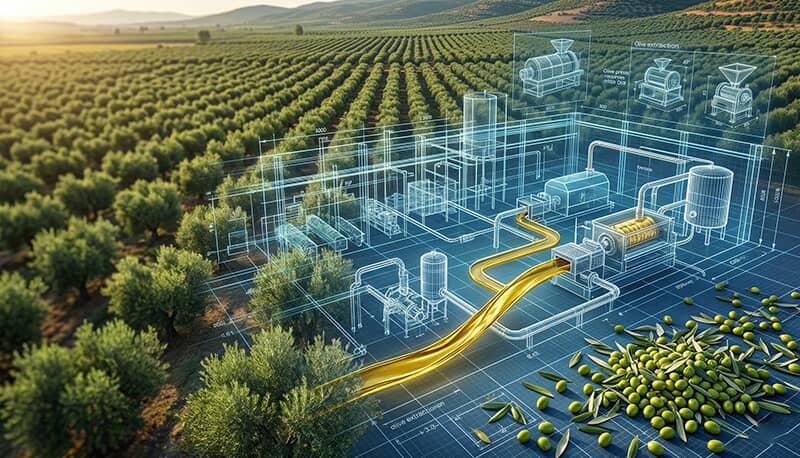
Estimating the total olive oil processing plant cost requires a detailed analysis of both Capital Expenditure (CAPEX) and Operational Expenditure (OPEX). For a standard commercial production line, the investment typically ranges from $50,000 for small-scale batch operations to over $500,000 for high-capacity continuous systems. The primary price drivers are the hourly throughput capacity and the level of automation integrated into the centrifugal separation phases.
Initial Capital Investment: Machinery and Infrastructure
The core of the investment lies in the extraction equipment. A standard “Cold Press” line must maintain processing temperatures below 27°C to qualify for Extra Virgin Olive Oil (EVOO) status. Key components include
- Cleaning and Defoliation: Removes leaves and debris to prevent chlorophyll-induced oxidation.
- Crusher Machine: Hammer mills or tooth-disc crushers designed to minimize heat generation.
- Malaxation Tanks: Essential for oil droplet coalescence. Modern stainless steel (AISI 304/316) kneaders with precise temperature sensors are critical for quality.
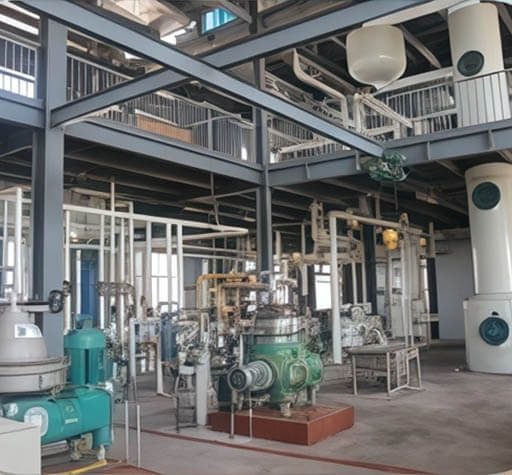
- Disc Stack Centrifuge: Two-phase or three-phase systems for separating oil, water, and pomace.
Technical Parameters Impacting Long-term Costs
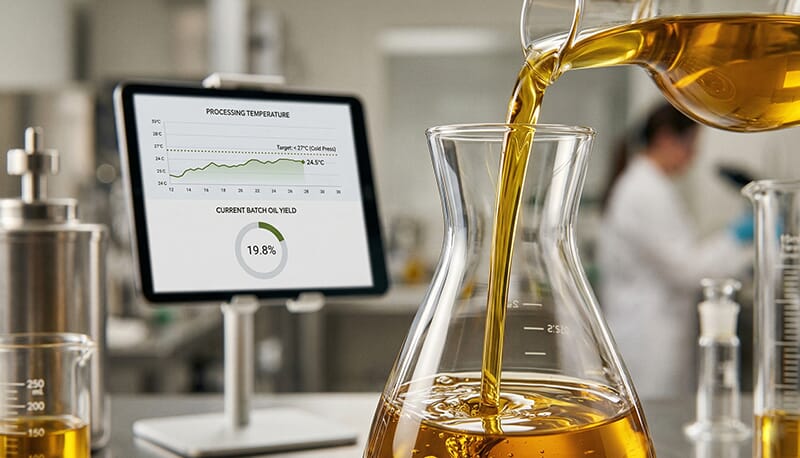
From an engineering perspective, the cheapest machine often results in the highest long-term cost due to poor oil recovery rates. Guance Machinery focuses on minimizing the residual oil in the pomace. While industry averages show a residual oil rate of 8-10%, our high-performance decanters can reduce this to below 5%. In a plant processing 10 tons of olives per day, a 2% increase in yield translates to significant annual revenue gains.
Operating Expenses (OPEX) and Maintenance
Beyond the purchase price, energy consumption and wear-part replacement dictate profitability. High-efficiency motors (IE3 standard) reduce power consumption by 15-20%. Typical maintenance involves the replacement of centrifuge seals and vibration dampers. Using wear-resistant materials in the screw conveyor of the decanter ensures a service life of over 10,000 hours before major overhauls are required.
Maximizing ROI through Equipment Selection

When evaluating the olive oil processing plant cost, the focus should remain on the “cost per liter produced” over a 10-year lifecycle. Factors such as water consumption in three-phase systems versus the energy requirements of two-phase systems must be balanced against local utility rates. Our modular designs allow for scaling from 500kg/h to 10t/h, ensuring that the initial investment aligns with current fruit supply while allowing for future expansion.
Guance Machinery provides integrated solutions that prioritize durability. By utilizing precision-balanced centrifugal components and automated PLC control systems, we ensure stable operation during the critical harvest season, where any downtime leads to rapid fruit degradation and financial loss. Professional installation and calibration are included to ensure the plant meets global EVOO standards from the first batch.
Contact us now to save you tens of thousands to hundreds of thousands of dollars.
📩 Get Your Free Quote Today
Contact us today to discuss your project, capacity requirements, and target materials. Our team will reply within 24 hours with a customized proposal. You can also reach us directly at guanceoilmachinery@gmail.com — we are here to help!