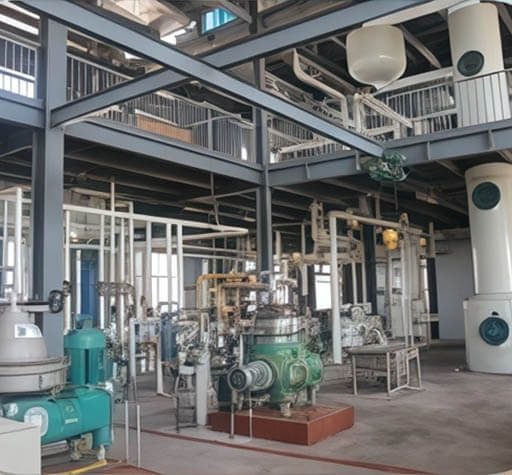
When planning a small-scale batch oil refining system, understanding the key equipment and how each unit works together is essential. Although the overall process may seem simple at first, each piece of equipment plays a specific role. Therefore, selecting the right configuration will directly affect oil quality, production efficiency, and operating cost.
Core units
A typical small-scale batch refining line usually includes several core units: a degumming tank, a neutralization (deacidification) tank, a bleaching tank, and a deodorization unit. In addition, auxiliary equipment such as vacuum pumps, heat exchangers, and filtration systems is also required. Together, these components form a complete refining system.
Degumming
To begin with, the degumming tank is used to remove phospholipids and impurities from crude oil. At this stage, water or acid is added, and the oil is heated and stirred. As a result, gums are separated from the oil. This step is especially important because it prepares the oil for the following processes. Without proper degumming, later stages may become less efficient.
Neutralization
Next, the neutralization tank is responsible for removing free fatty acids. Typically, an alkaline solution is added, and a chemical reaction occurs. Consequently, soapstock is formed and then separated. Compared with large continuous systems, batch neutralization allows more flexible control. Therefore, it is particularly suitable for small producers who process different types of raw materials.
Bleaching
After that, the bleaching tank plays a crucial role in improving oil color and removing pigments. In this step, bleaching earth or activated carbon is mixed with the oil under controlled temperature and vacuum conditions. Meanwhile, continuous stirring ensures proper contact between the adsorbent and the oil. Then, the mixture is filtered to remove spent clay. As a result, the oil becomes clearer and more visually appealing.
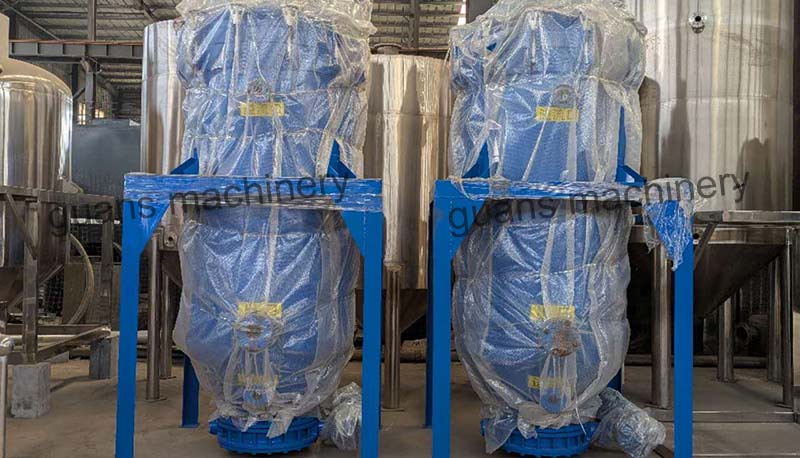 Leaf-Filter
Deodorization
Finally, the deodorization unit removes odors and volatile compounds. This process usually involves high temperature and vacuum conditions. Steam is injected to strip unwanted smells from the oil. Consequently, the final product achieves a neutral taste and longer shelf life. Although this step requires careful temperature control, it significantly enhances product quality.
Refining approaches
On the other hand, different raw materials require slightly different refining approaches. For example, peanut oil generally contains fewer gums, so the degumming process can be relatively mild. In contrast, crude soybean oil often has higher phospholipid content. Therefore, a more intensive degumming step is necessary. Similarly, sunflower oil may require more attention during bleaching due to its pigment composition. As a result, operators must adjust parameters based on the specific oil type.
Equipment selection
In addition, equipment selection should always match production requirements. For instance, if the daily capacity is small, compact multifunctional tanks may be a better choice. However, if production needs increase, separate tanks for each process can improve efficiency. Moreover, budget also plays a key role. While high-end configurations offer better automation and control, simpler systems can still achieve good results with proper operation.
Furthermore, it is important to consider energy consumption and ease of operation. Systems with good insulation, efficient heating, and reliable vacuum performance will reduce operating costs over time. At the same time, user-friendly controls can make daily operation much easier, especially for small teams.
Conclusion
In conclusion, a well-designed small-scale batch refining system depends on both proper equipment selection and correct configuration. By understanding the function of each unit and adjusting the process according to raw materials and production goals, producers can achieve stable quality and efficient operation. Therefore, careful planning at the beginning will lead to better long-term results.
📩 Get Your Free Quote Today
Contact us today to discuss your project, capacity requirements, and target materials. Our team will reply within 24 hours with a customized proposal. You can also reach us directly at guanceoilmachinery@gmail.com — we are here to help!