After soybean oil is extracted through pressing or solvent extraction, the obtained crude soybean oil still contains various impurities. These substances may affect oil stability, appearance, taste, and shelf life. Therefore, crude soybean oil must undergo a refining process before it can be used as edible oil.
A modern soybean oil refining plant improves oil quality through several key stages, including degumming, neutralization, bleaching, and deodorization. Each stage removes different types of impurities. Consequently, the final refined soybean oil achieves better color, flavor, stability, and food safety performance.
Why Does Soybean Oil Need Refining?
Crude soybean oil contains natural components from soybean seeds, such as phospholipids, free fatty acids, pigments, trace metals, oxidation products, and other impurities. Although these substances exist naturally, they may negatively affect the quality of the finished oil. For example, phospholipids can cause cloudiness and reduce oil stability. Meanwhile, free fatty acids increase oil acidity and may affect taste. In addition, pigments such as chlorophyll and carotenoids influence oil color.
Therefore, refining is necessary to remove unwanted components while preserving valuable oil characteristics.
Degumming: Removing Phospholipids
Degumming is usually the first step in soybean oil refining.
During this stage, water or special treatment agents are added to the crude oil. As a result, phospholipids absorb water and become hydrated gums, which can be separated from the oil. Depending on the oil quality and final requirements, different degumming methods can be selected, including water degumming, acid degumming, and enzymatic degumming.
For soybean oil, water degumming is commonly used when the oil will be further processed through physical refining. However, chemical refining lines often use acid treatment to improve impurity removal.
Moreover, effective degumming improves the performance of later refining stages. Therefore, this step plays an important role in achieving stable operation.
Neutralization: Reducing Free Fatty Acids
After degumming, the oil enters the neutralization section in chemical refining systems.
In this process, an alkaline solution, usually sodium hydroxide, reacts with free fatty acids to form soap. The soap phase is then separated from the oil through centrifugation or settling. Consequently, the acidity of the oil decreases significantly. Besides removing free fatty acids, neutralization also helps remove some remaining impurities such as phospholipids, pigments, and trace metals.
However, the choice between chemical refining and physical refining depends on the oil quality, capacity, and investment requirements. For large soybean oil plants, physical refining is also widely considered because it reduces chemical consumption and lowers refining losses. Therefore, project design should be based on raw oil characteristics and production goals.
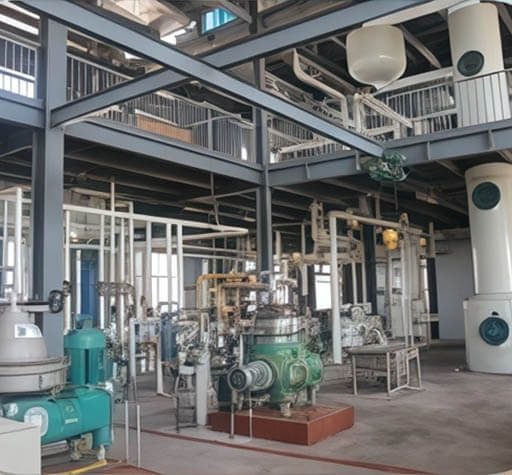
 Semi-Continuous-Oil-Refinery-Plant
Bleaching: Improving Oil Color and Stability
After degumming or neutralization, the oil moves to the bleaching section.
During bleaching, activated clay or other adsorbent materials are mixed with the oil under vacuum conditions. These materials remove pigments, oxidation products, and trace impurities. As a result, the oil color becomes lighter and the overall quality improves. Furthermore, bleaching helps extend oil shelf life by reducing substances that may accelerate oxidation. The efficiency of this stage depends on several factors, including clay dosage, temperature, contact time, and vacuum level.
Therefore, accurate control of operating conditions is essential for achieving consistent oil quality.
Deodorization: Removing Odor and Volatile Compounds
Deodorization is the final major stage in soybean oil refining.
Even after previous treatments, crude oil may contain unwanted odors and volatile compounds. Therefore, deodorization uses high temperature and vacuum conditions to remove these substances. During this process, direct steam stripping passes through the hot oil and carries volatile components away. Consequently, the refined oil obtains a neutral taste and odor, which is required for edible applications.
Moreover, deodorization improves the stability and market acceptance of soybean oil.
Chemical Refining vs Physical Refining
Soybean oil can be refined through either chemical refining or physical refining.
Chemical refining removes free fatty acids through alkali neutralization. It is suitable for oils with higher impurity levels and provides flexible processing performance. On the other hand, physical refining removes free fatty acids during deodorization through steam distillation. As a result, it requires fewer chemicals and can reduce refining losses. For large soybean oil plants, physical refining is becoming increasingly popular because of its lower operating cost and environmental advantages.
However, the best refining method depends on factors such as:
(1)Crude oil quality
(2)Free fatty acid content
(3)Production capacity
(4)Final product requirements
(5)Local regulations
Therefore, professional engineering evaluation is important before selecting refining technology.
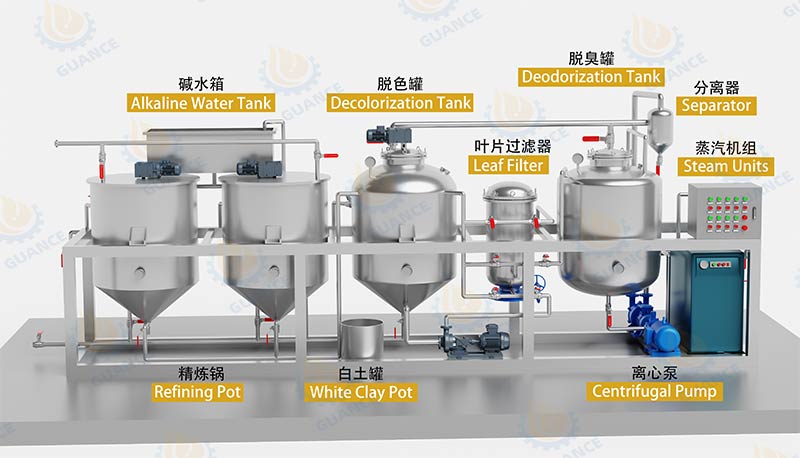 Small-Scale-Batch-Type-Oil-Refining-Plant
Complete Soybean Oil Refining Line
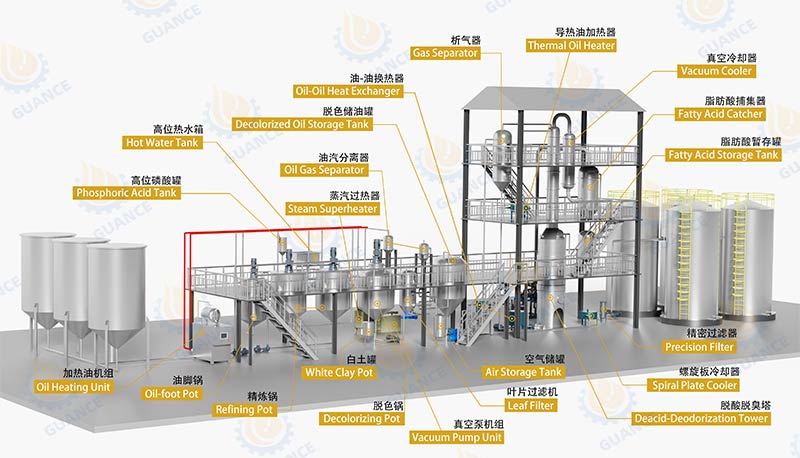
A complete soybean oil refining plant usually includes:
(1)Crude oil storage tanks
(2)Degumming system
(3)Neutralization system
(4)Bleaching system
(5)Filtration system
(6)Deodorization system
(7)Vacuum system
(8)Heat recovery system
Furthermore, modern refining plants are equipped with automatic control systems to improve operation stability and product consistency. As a result, processors can produce high-quality soybean oil that meets food industry requirements.
Conclusion
Soybean oil refining is an essential stage that transforms crude soybean oil into high-quality edible oil. Through degumming, neutralization, bleaching, and deodorization, impurities are removed and the oil’s appearance, stability, and taste are improved.
For investors planning a soybean oil processing project, selecting the right refining technology is as important as choosing extraction equipment. A properly designed refining system can reduce production losses, improve product quality, and increase the overall profitability of the plant.
📩 Get Your Free Quote Today
Contact us today to discuss your project, capacity requirements, and target materials. Our team will reply within 24 hours with a customized proposal. You can also reach us directly at guanceoilmachinery@gmail.com — we are here to help!